
Client
Issues
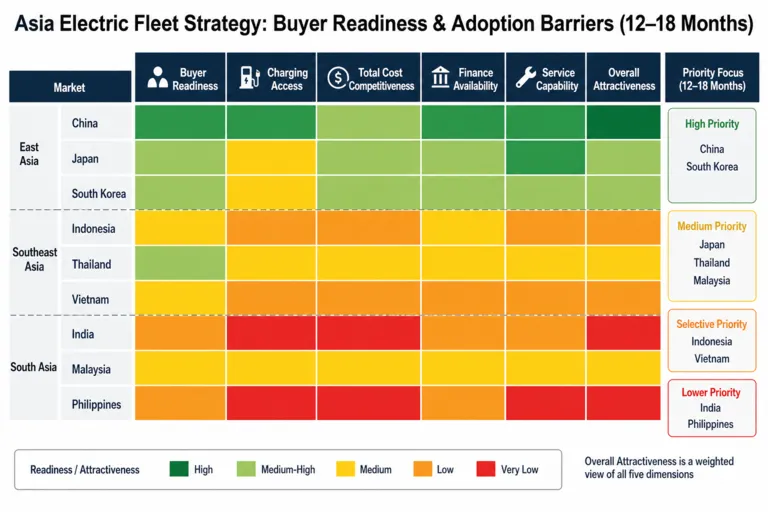
Interest in electric fleets was increasing, but purchase readiness remained uneven. Operators were concerned about vehicle range, charging access, maintenance, residual value, financing, payload, and potential operational disruption. The client needed to identify priority fleet segments and determine whether its existing proposition addressed the commercial realities faced by professional buyers in Singapore.
Solution
We developed a Singapore B2B fleet-market strategy focused on buyer readiness, adoption barriers, total-cost considerations, procurement cycles, charging requirements, competitor activity, and partnership needs. The engagement helped the client move from a broad technology-led proposition toward a practical commercial offer based on fleet productivity and operating performance.
Approach
We interviewed fleet owners, logistics operators, procurement managers, leasing companies, charging providers, maintenance partners, and mobility specialists. The research examined vehicle utilisation, route patterns, replacement cycles, charging access, purchase criteria, financing preferences, maintenance requirements, and service expectations. Priority segments were assessed according to operational suitability and near-term adoption potential.
Recommendations
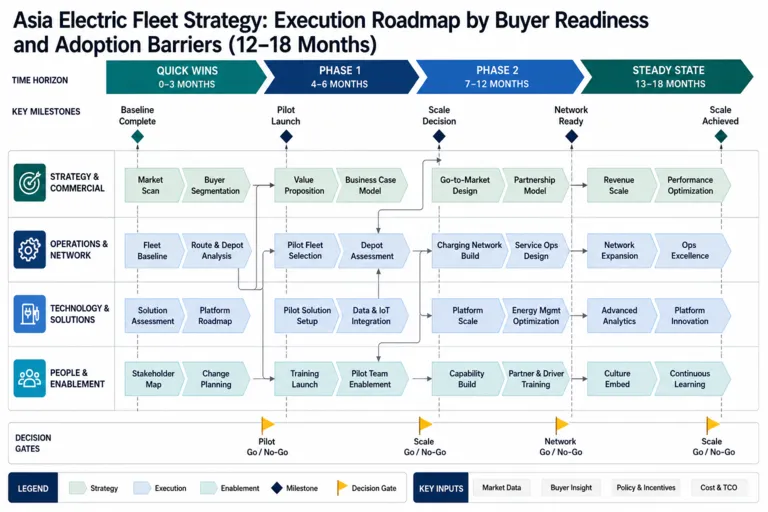
We recommended focusing on high-utilisation fleets with predictable routes, centralised parking, and regular depot access. The client should position the offer around total operating cost, uptime, charging support, maintenance, and after-sales service rather than vehicle technology alone. Pilot programmes, financing partnerships, and dedicated fleet-support packages were recommended before a wider commercial launch.
Engagement ROI
Within 12 to 18 months, the client secured three pilot agreements with priority fleet operators. Its qualified commercial pipeline increased by approximately 20%, and sales activity became more focused on accounts with realistic adoption potential. The pilots also generated practical evidence on vehicle performance, charging requirements, uptime, and maintenance needs.