The Philippines is reworking industrial energy supply planning as Malampaya’s original fields decline and imported LNG becomes a larger part of the gas balance. Natural gas now accounts for 22% of the country’s power generation, and LNG imports have risen to 46% of its natural gas feed stock, according to a U.S. government country guide. This shift is happening alongside rising electricity needs. National electricity consumption climbed 5.8% in 2024 as semiconductor assembly, food processing, and business-process outsourcing facilities expanded output, according to a power market report that also notes Luzon peak load topped 16 GW during summer months. For industrial users, that combination links fuel supply decisions more tightly to reliability, price swings, and contracting choices.
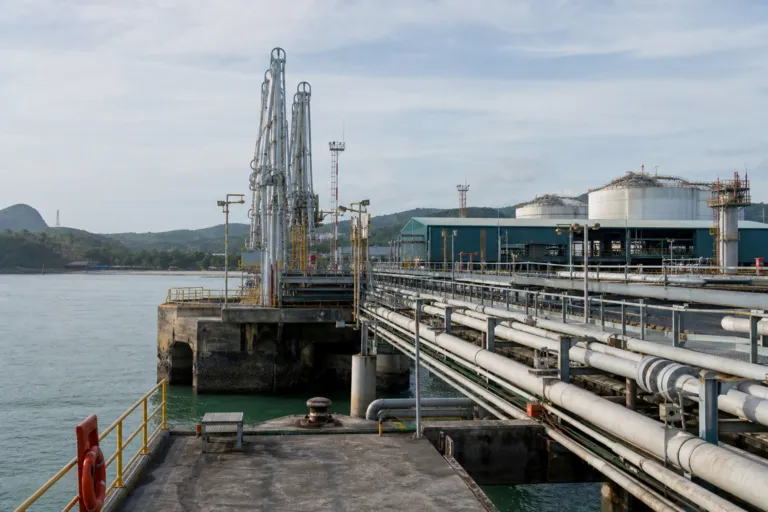
After the Philippines began LNG imports in 2023, developers pushed terminal capacity quickly. The country now operates two LNG import terminals and has plans to add four more by 2026, boosting regasification capacity to 10.72 MTPA, according to a 2026 cryogenic equipment market report. The same source says the country currently has five LNG infrastructure projects under development, representing total capacity of 13.72 MTPA across the region. Contracting is shifting too. In March 2025, Vitol signed a 10-year LNG supply agreement with the LNGPH terminal in Batangas to deliver up to 0.8 million tons of LNG annually, described as the country’s first long-term LNG supply contract. For industry, these moves shape how steady gas supply is secured and how exposure to market volatility is managed.
Cryogenic Buildout and Industrial Demand Are Moving Together
LNG buildout is also reshaping industrial supply chains because each terminal depends on ultra-low temperature handling and storage systems. Cryogenic equipment operates at temperatures below -150°C (-238°F) to handle liquefied gases, including LNG, and demand for tanks, vaporizers, heat exchangers, pumps, and valves rises with regasification activity. IMARC Group data cited in the cryogenic equipment report places the Philippines cryogenic equipment market at USD 472.93 million in 2025, projected to reach USD 674.99 million by 2034, with a CAGR of 4.03% during 2026–2034. This matters beyond energy. The same report links growth to high-purity industrial gas needs for semiconductor manufacturing, describing a government-backed 110 billion roadmap targeting 70 billion in semiconductor exports and $40 billion in electronics exports annually by 2030.
New Malampaya Phase 4 discoveries change the timing, not the direction, of the import-linked gas system. Gulf News reports that two wells, Malampaya East 1 and Camago 3, have combined estimated reserves of about 222 billion cubic feet of natural gas, and authorities estimate this could extend Malampaya’s productive life to around 2034. The same report says the Camago-3 well flowed at rates of up to 60 million standard cubic feet of gas per day, and that Prime Energy is on track to deliver first gas from the Malampaya Phase 4 development by the fourth quarter of 2026. FULCRUM adds that Malampaya East-1 has an estimated 98 billion cubic feet of natural gas and argues its modest size and long development timeline mean it cannot easily substitute for imported gas, reinforcing LNG’s role as a stop-gap that still carries global price volatility and exchange rate risks.
Energy transition policy and power-market pressures are now shaping how gas fits into industrial supply strategies. The 2024 Philippine Energy Plan mandates a 35% renewable share by 2030 and 50% by 2040, according to the power market report. It also notes the third Green Energy Auction round cleared 2.5 GW of solar at PHP 2.45 per kWh (USD 0.044), 30% below new-coal costs, while distribution utilities must procure 2.5% of supply from renewables in 2025 and 5% by 2027. At the same time, the report cites post-Malampaya LNG volatility nudging commercial users toward direct power-purchase agreements. The Department of Energy also plans an aggregation process combining indigenous and imported gas purchases to lower costs and ensure supply stability, according to the U.S. country guide. Together, these shifts are defining what a Philippines LNG import gas transition looks like for industry: more infrastructure, more contracting complexity, and more parallel renewable procurement.
How fast is the Philippines expanding LNG import capacity after Malampaya’s decline?
What share of the Philippines’ natural gas feed stock now comes from imported LNG?
How do Malampaya Phase 4 discoveries affect dependence on LNG imports?
Why is cryogenic equipment becoming more important in the LNG-driven transition?
What does the Philippines LNG import gas transition mean for industrial power sourcing?