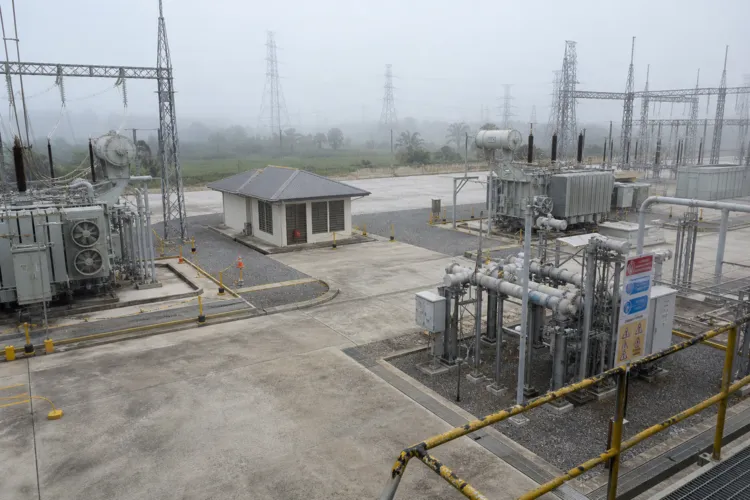
In 2026, the competitive edge for data centre development in Southeast Asia is shifting from land to electricity delivery. A Bain & Company and Standard Chartered report argues that concentrated, creditworthy electricity demand—especially from data centers—has outpaced regional transmission and distribution capacity. That creates a binding grid constraint that can decide where capital lands, and whether the region captures economic and climate benefits tied to the energy transition. This is the real story behind today’s ASEAN data center power constraints: projects can look perfect on paper, yet fail on the one variable that turns a pipeline into revenue—an energization date.
Data centers are the accelerant because the loads arrive as large, discrete blocks and need round-the-clock reliability. The same Bain and Standard Chartered analysis describes typical project blocks of 100–500 MW, with compressed timelines: data center projects can be built in 1–3 years, while traditional grid reinforcements commonly take 5–15 years. It also expects roughly 35–45 TWh of incremental data centre electricity demand by 2030, concentrated in hubs such as Singapore, Johor, Bangkok, Greater Jakarta, Manila, Batam. In Bain’s operator survey, 90% identify grid connection delays as a top constraint, and many say they would pay a premium for guaranteed time-to-power—because without it, the rest of the site checklist becomes secondary.
Country Readiness Is Diverging: Fast-track vs. Queue
Country contrasts show how “grid gatekeepers” shape outcomes. Malaysia’s Johor is described as a magnet for hyperscalers with fast-track energization, but water approvals and T&D headroom constrain scale. Thailand’s Eastern Economic Corridor pairs pre-zoned industrial land and dispatchable supply to reduce time-to-power, yet reserve margins tightened as large loads scaled rapidly. Indonesia is flagged for a growing backlog: Greater Jakarta clusters face multiyear connection queues amid a state-centric Perusahaan Listrik Negara (PLN) market. Vietnam is portrayed as having strong corporate demand and new Direct Power Purchase Agreement (DPPA) frameworks, but legacy FIT disputes and northern transmission bottlenecks can blunt confidence.
The Philippines is called out for having a rising pipeline and industrial demand around Manila, while inter-island transmission and grid modernization lag where corporate loads concentrate. Bain flags Luzon’s backbone and regional interconnections as priority areas, warning that without faster upgrades, developers face long connection lead times and limited wheeling options, pushing some toward behind-the-meter (BTM) generation. The report describes BTM as practical for short-term resiliency, but an imperfect long-term substitute due to regulatory fragmentation, fuel access issues, and poor monetization of surplus power. That mix turns “time-to-power” into a board-level risk, not just an engineering constraint.
This grid reality is also reshaping dealmaking and who wins. ARC Group says 2026 is shifting from greenfield development to consolidation, because securing land, power, and permitting from scratch is no longer viable for many buyers. It expects platform-level assets—those combining secured power, multi-market execution, and delivery track record—to command premium valuations of 25–35x EBITDA, versus single-asset trades. Separately, Singapore remains the region’s leader with around 1 GW installed capacity, but land constraints have driven stricter control; in DC-CFA2, which closed March 31, 2026, only 200 MW of additional capacity was allowed. The practical takeaway is simple: in 2026, power access, interconnection certainty, and bankable market design are increasingly the real moat.
Why is grid access becoming the deciding factor for ASEAN data centre winners in 2026?
What scale of new data centre electricity demand is expected in Southeast Asia by 2030?
How common are grid connection delays for operators in the region?
How do these ASEAN data center power constraints change M&A and investment strategy in 2026?
What does Singapore’s 2026 policy signal about constraints on expansion?