
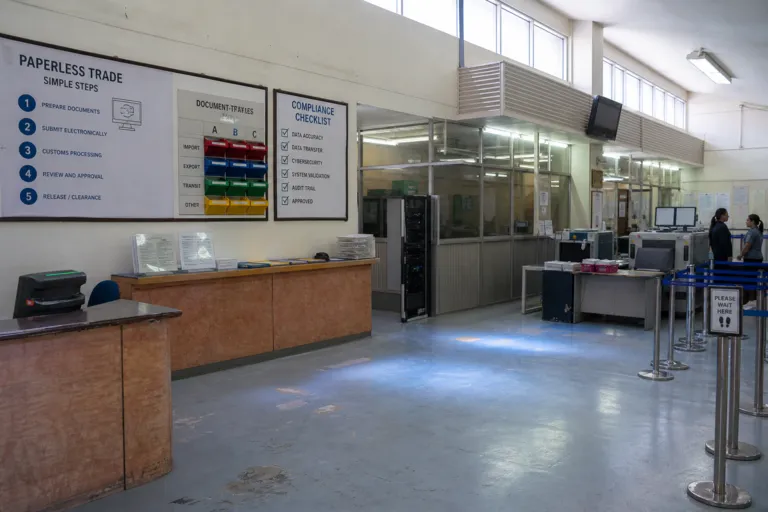
ASEAN’s Digital Economy Framework Agreement (DEFA) is positioned as a dedicated, region-wide pact focused exclusively on digital economy governance, rather than digital chapters embedded inside broader trade deals. The World Economic Forum notes it is poised to become the world’s first region-wide agreement centered on digital economy governance, with the goal of harmonizing digital trade rules, enabling trusted cross-border data flows, and setting coherent rules for paperless trading, e-commerce, cybersecurity, and digital payments across ASEAN. ASEAN has also said it expects the agreement to be signed by the end of 2026, while stressing that benefits depend on full conclusion, timely signing, and effective implementation.
Why it matters for B2B is the economic weight already moving through digital channels in ASEAN. The OECD reports that ASEAN’s digital trade exports reached USD 387 billion, representing nearly 20% of total ASEAN exports and 6% of global digital trade. That starting point makes governance and interoperability more than policy topics; they become operating conditions for procurement teams, distributors, and service providers selling into multiple ASEAN markets. In parallel, several sources frame DEFA as part of a longer regional ambition: it is foreseen to play an essential role in realizing the ASEAN 2045 vision and the AEC Strategic Plan 2026-2030, with full conclusion and signing expected by 2026.
What Changes for Cross-Border B2B Operating Playbooks
For B2B operators, DEFA’s promise is less about a single switch and more about lowering friction across many small steps that add up: onboarding customers, exchanging data, clearing shipments, and getting paid. A regional cross-border e-commerce report calls the 2026 conclusion of DEFA negotiations a “concrete anchor” for harmonization workstreams that can translate into scalable cross-border operating playbooks once rules are implemented. The World Economic Forum also highlights MSME impact in practical terms, arguing DEFA’s significance should be measured in the marginal cost of entering a company’s second, third, or fourth ASEAN market. In ASEAN, MSMEs comprise about 97% of companies and account for roughly 85% of employment, making these marginal cost reductions commercially meaningful for B2B ecosystems.
Compliance complexity is already reshaping cross-border models, and it is pushing more demand onto platforms and service providers. The same cross-border e-commerce report notes that Vietnam’s Law on E-Commerce 2025 takes effect on 1 July 2026 and Indonesia’s Ministry of Trade Regulation 19/2026 takes effect on 8 June 2026, both elevating platform responsibilities and foreign seller obligations. It adds that this drives demand for embedded compliance services, such as local representation support, product eligibility controls, and duty and tax computation at checkout. The report also flags operational pain points like “multiple tax engines,” which can inflate operating costs and create checkout confusion. In that environment, DEFA’s direction toward harmonized digital trade and e-commerce rules is framed as a regional path to reduce friction for platforms, logistics providers, and sellers operating across multiple ASEAN markets.
Timing and scope are also becoming clearer. The World Economic Forum reports that a group of 11 countries finished negotiating DEFA in May 2026, with signing described as expected at the ASEAN Summit in November 2026, followed by ratification and implementation. Negotiators also added “emerging technologies including artificial intelligence” to future-proof the pact. Multiple sources connect DEFA to a broader growth narrative, stating it aims to bolster a digital economy that could reach US$2 trillion by 2030, and that studies indicate it could reach as much as US$2 trillion by 2030 with successful implementation. For B2B leaders, the practical takeaway is to track not only the signature moment, but also the implementation details that turn a shared rulebook into day-to-day interoperability across ASEAN.
What is the ASEAN Digital Economy Framework Agreement (DEFA) expected to do for digital trade?
When is DEFA expected to be signed and what happens after that?
How big is ASEAN’s digital trade today, according to the OECD?
Why does DEFA matter for MSMEs in cross-border commerce?
What kinds of compliance pressures are shaping cross-border operations in 2026?