In 2026, the China Plus One discussion has matured into operational execution. Multiple sources stress that diversification is not the same as a wholesale exit from China. One definition frames it clearly: China Plus One is not total relocation, and global FDI to China stayed “substantially elevated levels through 2023,” even as ASEAN attracted a record USD 225 billion in FDI in 2024 (UNCTAD, World Investment Report, as cited). In parallel, B2B manufacturers are described as having completed or being close to completing the first phase of supply chain restructuring in 2026: they are qualifying alternatives, establishing secondary sites, and building buffer inventory protocols for critical components.
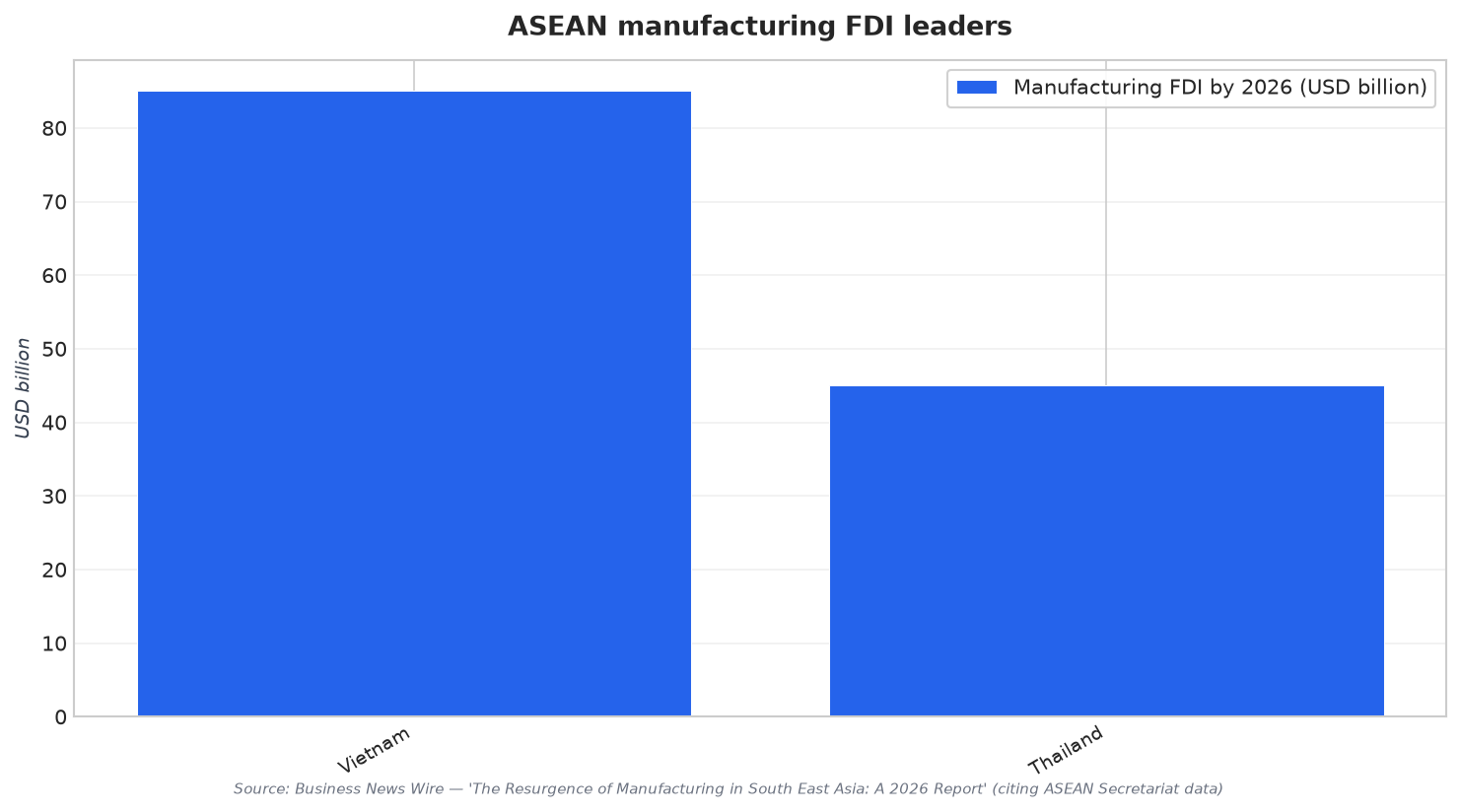
Across Southeast Asia, the relocation pattern is uneven by country and by product. One 2026 report claims Southeast Asia is “poised to capture 25% of global manufacturing by 2026” (World Bank projections, as cited in that report). It also states South East Asia will attract $220 billion in manufacturing FDI by 2026, led by Vietnam ($85B) and Thailand ($45B) per ASEAN Secretariat data. The same report describes FDI growth accelerating with annual increases above 15% in top destinations, and it highlights a manufacturing-driven employment surge of 12M new jobs through workforce expansion and vocational training. These figures signal momentum, but they should be read as projections and claims from that specific report rather than as audited outcomes.
Where Relocation Is Most Visible in 2025–2026: Electronics and PCB Footprints
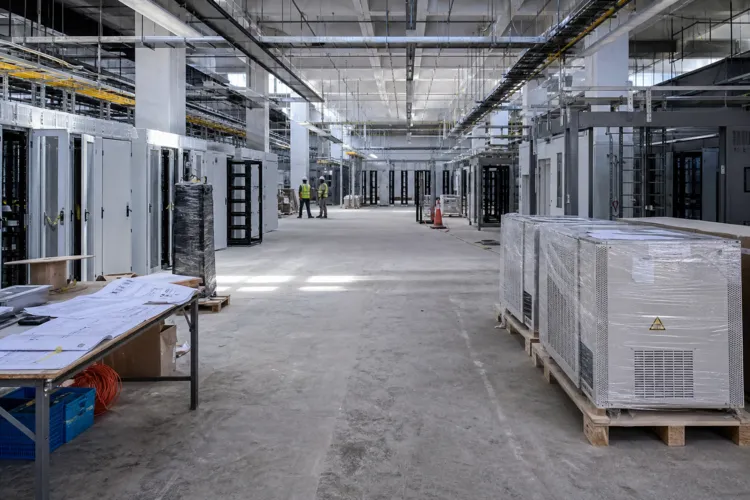
PCB investment offers a concrete, trackable window into where new capacity is being placed. An industry update citing Prismark’s 2026 outlook says total PCB capital expenditure in ASEAN nations reached approximately $4.8 billion in 2025, nearly triple the $1.7 billion invested in 2022. It also positions Thailand as the leading Southeast Asian destination for PCB manufacturing, with an estimated $2.3 billion in new facility investments announced or underway since 2024. Specific company moves reinforce the direction of travel: Unimicron has committed over $800 million to Thailand with a new HDI and substrate facility scheduled for volume production in late 2026; Compeq expanded Vietnamese operations with a $350 million Phase 2 focused on automotive multilayer boards; AT&S accelerated expansion in Kulim, Malaysia with an additional €400 million targeting IC substrate and advanced HDI production. It also notes Chinese PCB manufacturers, including Shennan Circuits and Kinwong Electronic, establishing or expanding Southeast Asian operations.
Country positioning is becoming more specialized, not interchangeable. Malaysia is described as leveraging its semiconductor ecosystem in Penang and Johor to attract PCB manufacturers who want proximity to chip packaging and assembly, with several major multilayer PCB facilities breaking ground in 2025 for automotive and industrial segments. Indonesia is framed as a beneficiary of the broader ASEAN FDI surge and as offering scale, a large domestic market, and critical-mineral resources relevant for battery supply chains. At the regional level, Asia Pacific is estimated to hold about 42.7% of global manufacturing output in 2026, and a separate Asia-Pacific analysis emphasizes diversification from established hubs (China, Taiwan, South Korea) to growth markets including Vietnam and Indonesia. For B2B manufacturers, the practical implication is that “Plus One” choices are being made by ecosystem fit—electronics clusters, supply chain adjacency, and the speed of qualifying second sources—rather than by a single “best” country.
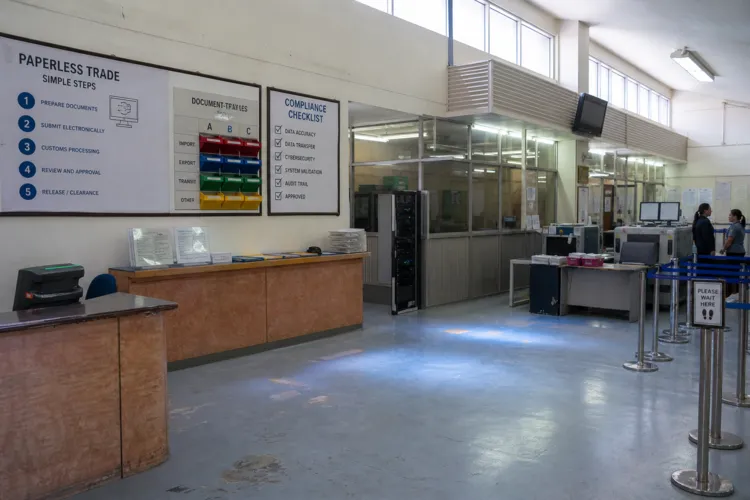
For procurement teams, the 2026 playbook is shifting from announcing intent to proving resilience. One 2026 trends analysis says most large industrial manufacturers are finishing the first phase of restructuring: alternative sourcing qualification, secondary manufacturing sites, and buffer inventory protocols. This complements the capital signals seen in ASEAN PCB buildouts and the FDI projections reported for Vietnam and Thailand. It also fits a broader backdrop of structural realignment in manufacturing and procurement behavior, including digitization: the global B2B ecommerce market is projected to approach $36 trillion by 2026, and industrial robotics is forecast to expand at a 10.5% CAGR through 2030 (as cited). In this environment, “China plus one” decisions in Southeast Asia are increasingly judged by execution milestones—site readiness, supplier qualification, and ramp timelines—rather than by strategy decks alone.
Is China Plus One in 2026 the same as leaving China?
Which ASEAN country is cited as the leading destination for PCB manufacturing investment?
What numbers show the scale of ASEAN PCB expansion in 2025?
How is Malaysia positioned in the 2026 relocation narrative?
What does the China Plus One Southeast Asia 2026 topic look like in execution terms?