
In Central Luzon, the real estate story is increasingly being written by infrastructure. Government data cited by BusinessWorld shows the region recorded 6.5% GDP growth in 2024, up from 6.1% in 2023, and accounted for 11.1% of national GDP. That combination helps explain why major developers have been aggressively landbanking and pushing masterplanned communities, especially in Bulacan, Tarlac, and Pampanga. The logic is straightforward. Better connectivity changes where people can live and where firms can operate. As a result, property demand expands beyond traditional city centers and begins to cluster around transport corridors and new hubs.
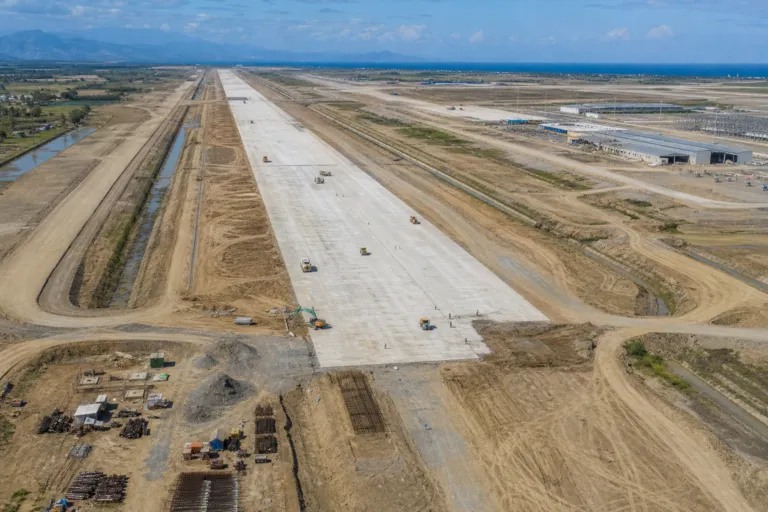
Airports, rail, and expressways are central to this shift. BusinessWorld points to projects that will further integrate Central Luzon with Metro Manila, including the NLEX-SLEX Connector (2026), MRT Line 7 (2027), and the Manila-Clark Railway slated for completion in 2028. It also cites the New Manila International Airport expected beyond 2028 with a capacity of 100 million passengers annually, alongside the expansion of Clark International Airport completed in 2021. In Bulacan, a BusinessMirror column argues that MRT-7 and the New Manila International Airport are likely to redefine the province’s residential landscape, reinforcing the idea that airport-led growth can pull investment outward.
Bulacan’s Aerotropolis Thesis: Industrial, Township, and Housing Pull
The aerotropolis concept is not just local hype; it also shows up in global market research. Market Research Intellect estimates aerotropolis development generated USD 6,420 million in 2025 and projects USD 11,180 million by 2035, advancing at a 5.7% CAGR from 2026 to 2035. In Central Luzon, Colliers reporting carried by Manila Bulletin frames industrial real estate as the region’s strongest growth story, with 930 hectares of new industrial land expected from 2026 to 2028. That pipeline sits alongside rising interest near Bulacan’s future airport and along NLEX, where mixed-use and residential projects are described as reshaping the development map. For investors, it links jobs, logistics demand, and housing demand into one ecosystem.
On the ground, the region’s housing market already reflects uneven pricing tied to access and growth corridors. Bamboo Routes estimates a normal family house in Central Luzon now costs roughly ₱3 million to ₱8 million, with ₱5 million as a useful benchmark for a mainstream home. The same analysis notes Bulacan is “no longer reliably cheap,” with mainstream developer houses commonly moving into the ₱6 million to ₱10 million range in better-connected locations. Affordability is a constraint. With average Central Luzon family income around ₱37,300 a month, even a ₱3 million house can consume a large share of income once financed. That tension helps explain why buyers gravitate to practical budgets and why location premiums intensify near major infrastructure.
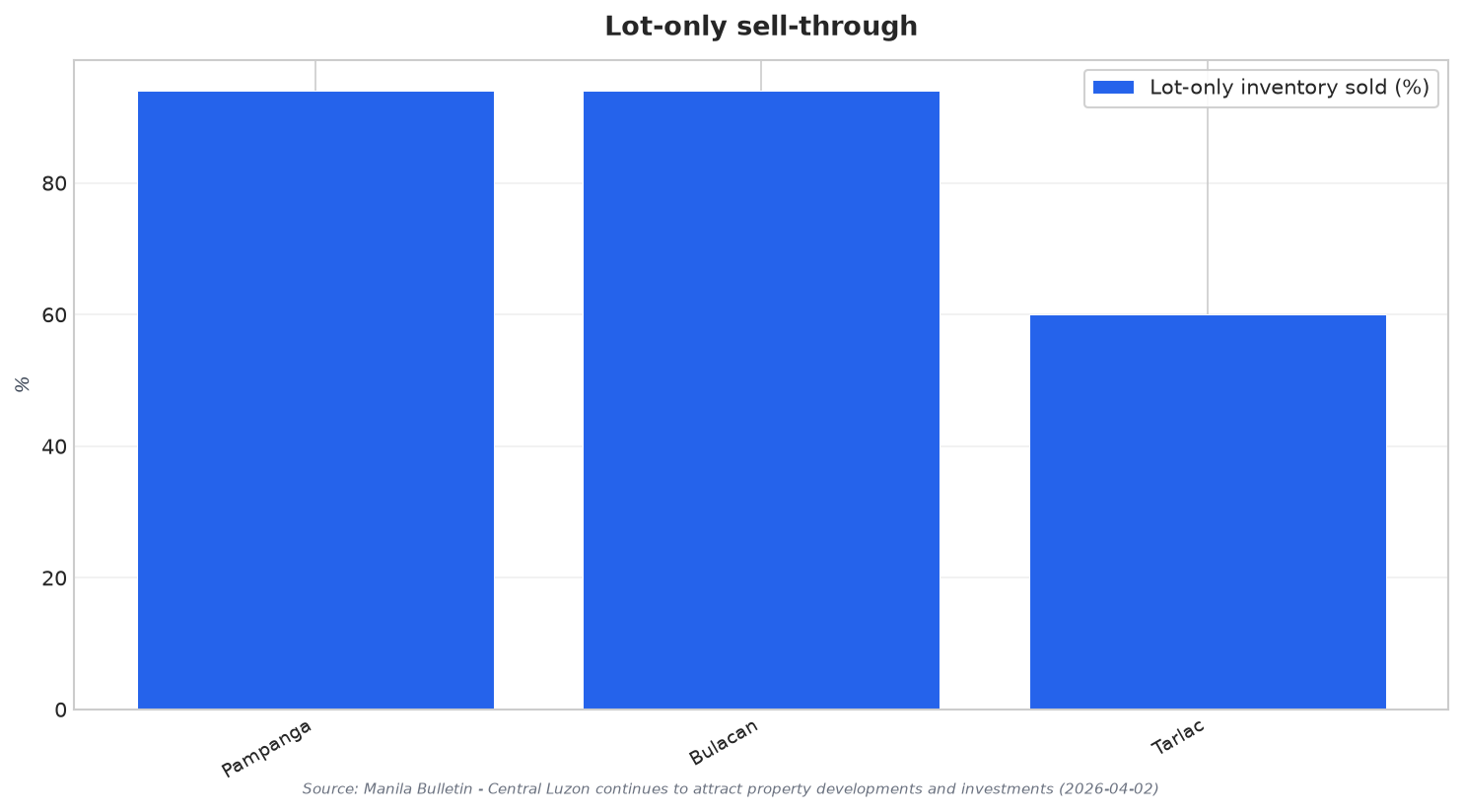
Demand signals also show up in lot-only and hospitality indicators cited by Manila Bulletin. In the lot-only market, total inventory sold is at 94% in Pampanga and 94% in Bulacan, with Tarlac at 60%. In Clark, hotel occupancy in 2025 was recorded between 70% and 85%, and a roster of upcoming hotels from 2026 to 2029 is listed for Subic, Pampanga, and Clark. Put together, these metrics suggest a region attracting both end-users and investors across multiple asset types. For those tracking the Philippines New Manila International Airport as a catalyst, Bulacan’s positioning is less about a single project and more about how an airport anchor can concentrate industrial supply, township build-outs, and residential absorption in one corridor.
What makes Central Luzon a stronger property story going into 2026?
How is the New Manila International Airport expected to influence Bulacan real estate?
What price ranges define a “normal” family house in Central Luzon?
What is the industrial development outlook for Central Luzon from 2026 to 2028?
Are there concrete signs of lot demand in Bulacan and nearby provinces?