
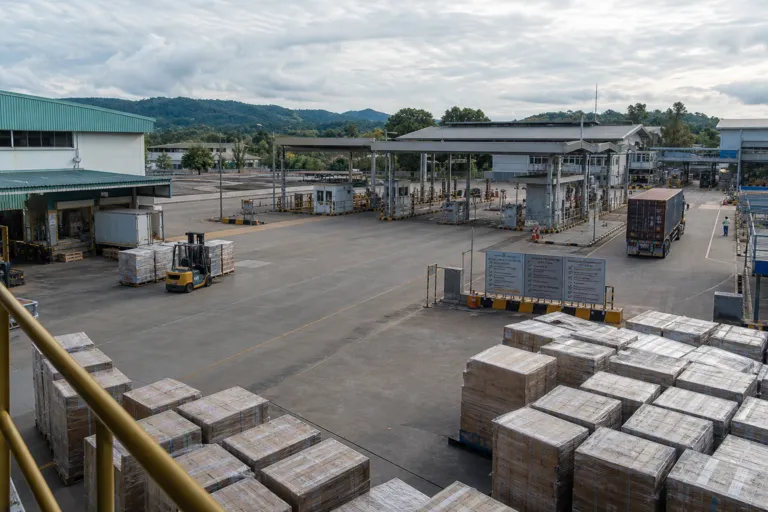
ACFTA 3.0 is not just another tariff story. The ACFTA 3.0 Upgrade Protocol was formally signed on 28 October 2025 during the 47th ASEAN Summit in Kuala Lumpur, after negotiations that began in November 2022 and concluded in 2025. It is described as the most comprehensive revision since ACFTA launched in 2010, and it is designed to cushion the region against external shocks that are geopolitical, climatic, and economic. For B2B supply chains heading into 2026, the message is clear: ASEAN-China trade is being upgraded toward deeper, multi-sector integration that touches data, sustainability, and production-chain coordination.
The scale of the relationship sets the stakes for procurement and manufacturing planning. Since 2010, bilateral trade nearly tripled from US$235.5 billion to US$696.7 billion in 2023, and it approached US$1 trillion in 2024. ASEAN statistics cited by CNA put bilateral trade at US$771 billion last year, while another business bulletin highlights over US$772 billion in two-way trade in 2024. In 2025, China’s imports and exports with ASEAN reached 5.57 trillion RMB (US$382.37 billion) in the first three quarters, up 9.6% year on year, and representing 16.6% of China’s total foreign trade. These are the volumes that make any rule change operationally meaningful for B2B supply chains.
What the Upgrade Changes for B2B Supply Chains in 2026
The upgraded pact expands cooperation across nine areas, including the digital economy, green development, and supply chain connectivity, alongside competition and consumer protection. US-ABC also points to modern chapters covering the digital economy, green development, consumer protection, competition policy, and capacity-building for MSMEs, plus strengthened commitments on supply-chain connectivity and trade facilitation. The trade-facilitation emphasis includes measures intended to streamline customs procedures, harmonize standards, and enhance infrastructure and digital platforms. For 2026 supply chain managers, that combination signals fewer “silo” decisions: compliance, logistics, data handling, and supplier qualification can move closer to a single operating model across ASEAN-China corridors.
2026 trade patterns underline why intermediate inputs matter as much as finished goods. In the first half of 2026, trade in intermediate goods—parts, components, and production inputs—between China and ASEAN grew 24.5% to 2.86 trillion yuan (about US$422 billion), accounting for around two-thirds of bilateral trade. The upgrade also aims to “promote the deep integration of the production and supply chains of both sides,” according to China’s commerce ministry as reported by CNA. This matters for B2B buyers because intermediate goods typically sit in multi-tier supplier networks. When standards, digital processes, and border procedures are aligned, the biggest operational gains often appear in lead times, documentation cycles, and multi-country sourcing coordination rather than in any single headline tariff line.
Finally, ACFTA 3.0’s inclusivity and implementation risks shape how companies should act in 2026. MSME support is a named feature of the upgrade, and MSMEs make up over 90% of businesses in ASEAN, employing the majority of the workforce, according to ThinkChina. That creates more potential supplier nodes, but also raises the need for capacity-building and consistent execution. US-ABC notes that effective implementation depends on ratification and consistent application across ASEAN member states. In practice, B2B firms can treat the ASEAN China FTA 3.0 upgrade as a framework to deepen supplier development, digital trade readiness, and green compliance, while watching for uneven adoption that could still create friction across specific borders and sectors.
When was the ACFTA 3.0 Upgrade Protocol signed?
Which areas does ACFTA 3.0 expand beyond tariff reductions?
What does 2026 data show about intermediate goods trade between China and ASEAN?
How does the ASEAN China FTA 3.0 upgrade affect B2B supply-chain operations?
Why is MSME support relevant to supply chains under ACFTA 3.0?