
ASEAN’s 2026 growth agenda is increasingly linked to Sharia-compliant funding channels that are designed to match long-term development needs with clear ethical rules. Fitch said ASEAN’s Islamic finance industry exceeded USD 1 trillion in Q1 2026, supported by large Muslim populations, government commitments, accommodative regulation, halal economy growth, and digitalisation. In the same context, LSEG has described sukuk demand as being driven by GCC and ASEAN funding needs, plus rising interest from mainstream investors. Together, these signals frame a market where Islamic banking balance sheets and sukuk issuance are not parallel systems. They are becoming part of the region’s broader financing toolkit.
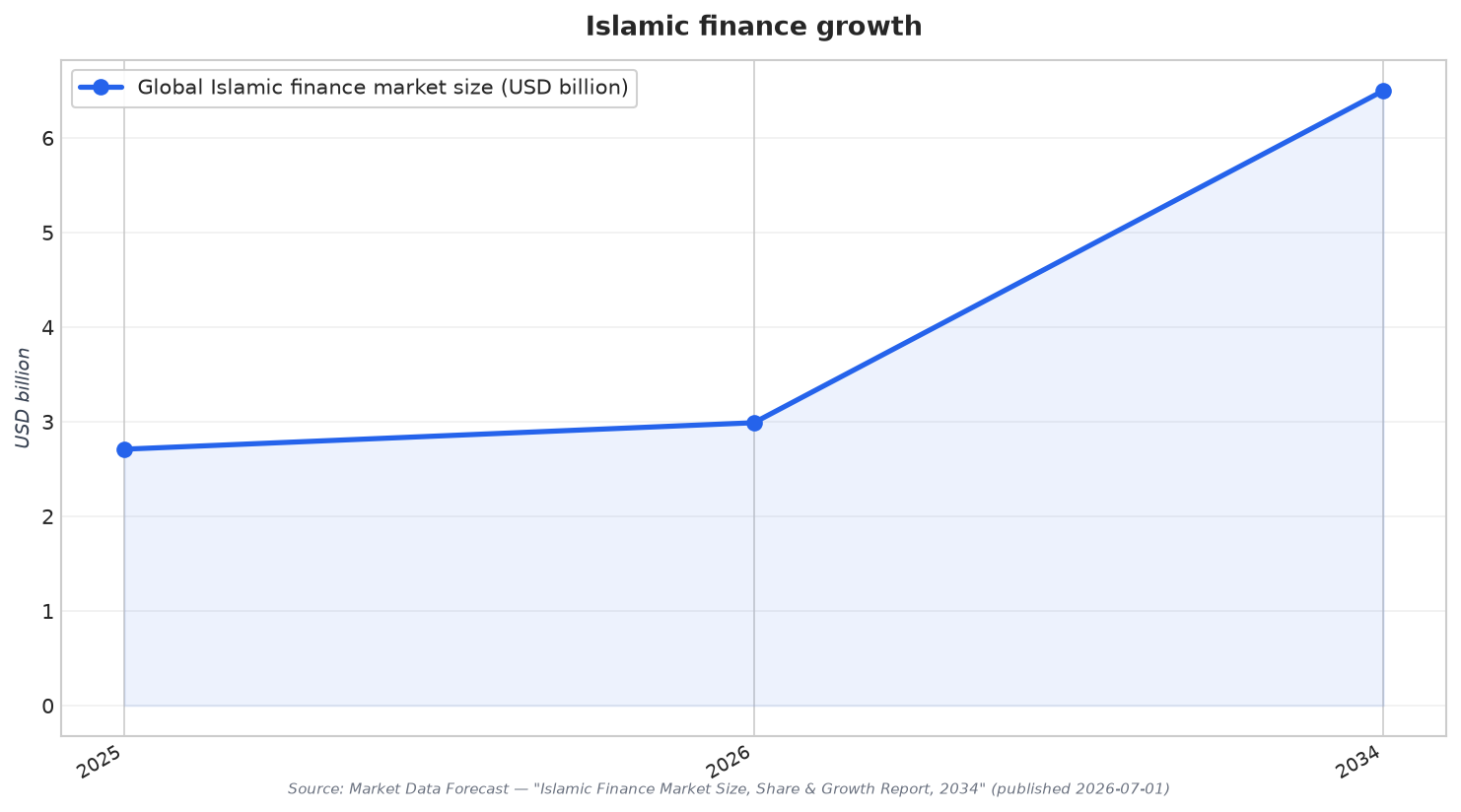
Zooming out to global context helps explain why ASEAN is getting more attention from issuers and investors. ICD and LSEG reported global Islamic finance assets reached US$5.98 trillion in 2024, a 21% year-on-year increase, across data analysed from 140 countries. In another global reference point, the World Bank reported approximately US$180 billion of total sukuk issuance in 2024 and identified Malaysia and Indonesia among the largest issuance jurisdictions that year. This does not mean every market is growing at the same pace. But it does show that sukuk is a mainstream format for sovereign and institutional funding, with ASEAN-linked jurisdictions repeatedly appearing in global issuance discussions.
Sukuk, Sustainability, and the New Investor Mix
Sukuk structures are also being adapted for sustainability-linked and green-aligned goals, which can broaden the investor base for ASEAN-related funding programs. The World Bank noted that green and sustainable sukuk had grown to represent around 10% of the overall sukuk market by its 2025 review, and that the first green sukuk was issued in Malaysia in 2017. Separately, LSEG data cited by Trade Finance Global described ESG sukuk rising to $24 billion, reflecting 54% year-on-year growth, and highlighted the launch of Sustainability-Linked Financing (SLF) sukuk. While some examples cited were outside ASEAN, the underlying takeaway is relevant for regional issuers: labelled sukuk can connect faith-aligned capital with measurable sustainability outcomes.
Country-by-country readiness still varies, and that difference matters for how Islamic banking and sukuk can fund growth targets. Fitch said the Philippines’ contribution remains small despite recent regulatory and funding milestones. As of end-2025, Fitch put Islamic banking assets in the Philippines at USD 44 million, while the country issued its maiden USD 1 billion sovereign sukuk in 2023, carrying a BBB rating, and now has five licensed takaful operators. In contrast, Fitch noted that in Malaysia, Islamic financing already accounted for 44% of total banking system financing by end-2025, and Malaysia leads ASEAN’s Islamic fund industry with around USD 70 billion in assets under management (AUM). Indonesia, meanwhile, has emerged as one of the world’s largest sukuk issuers, reinforcing how different starting points shape funding capacity.
For planners thinking about ASEAN Islamic finance sukuk growth, the near-term opportunity is not only about issuing more instruments. It is about matching the right instrument to the right policy need, while keeping governance and market confidence strong. The World Bank’s examples of a 30-year Indonesian green sukuk and other high-profile deals underline that tenors and structures can be tailored, but they also cautioned these are not representative deal sizes for the whole market. With sukuk issuance and Islamic banking penetration both cited as drivers in multiple sources, ASEAN’s 2026 agenda can be supported by scaling familiar structures, widening participation, and using sustainability-linked formats where they fit the project pipeline.
How big is ASEAN’s Islamic finance market in 2026?
What do the sources say about global sukuk issuance and why it matters for ASEAN?
How fast is the global Islamic finance industry growing, based on the cited data?
What share of the sukuk market is green or sustainable?
What does the keyword topic—ASEAN Islamic finance and sukuk growth—look like in the Philippines versus Malaysia?