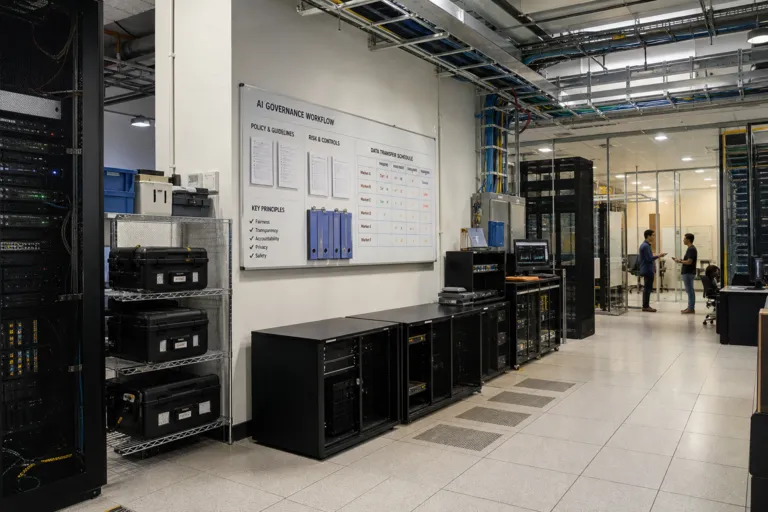
In 2026, AI adoption and digital trade are colliding with a new governance reality across Southeast Asia. ASEAN has already issued the ASEAN Guide on AI Ethics and Governance in February 2024, and followed it with a supplementary guide for Generative AI a year later. This direction matters for B2B operations because many ASEAN Member States are converging on an umbrella “soft law” approach, backed by hard law baseline regulations such as personal data protection and cybersecurity. The operational implication is simple. Enterprise teams can no longer treat AI controls as a single-product checklist. They need lifecycle governance from design to deployment, and they need it to work across procurement, finance, customer support, and supply chain workflows.
The push for regional alignment is also tied to digital trade scale. The OECD reports ASEAN digital trade exports reached USD 387 billion, representing nearly 20% of total ASEAN exports and 6% of global digital trade. That level of cross-border activity raises the stakes for data governance frameworks, services regulations, and other rules that can shape the availability and diffusion of AI and enabling goods and services. ASEAN has also reached broad agreement on emerging technologies, including AI, even as the Digital Economy Framework Agreement (DEFA) remained to be finalised by 2026. For B2B operators selling across multiple ASEAN markets, governance consistency becomes a competitive capability, not just a compliance task.
What DEFA and Regional Guides Mean for Multi-Market B2B Ops
DEFA is positioned as the mechanism that could reduce fragmentation for businesses operating in multiple ASEAN markets. A business compliance analysis notes negotiations reached substantial conclusion, with signature expected by end of 2026, and describes DEFA as legally binding digital trade rules covering cross-border data flows, digital payments, cybersecurity, and AI governance. It also states that DEFA will create interoperability standards for AI governance across ASEAN members, formalising principles regulators already use as a baseline expectation when evaluating AI practices. In practice, this pushes B2B companies toward reusable governance patterns. Think common documentation, algorithmic transparency practices, and consistent generative AI controls that can travel from one market to another with less rework.
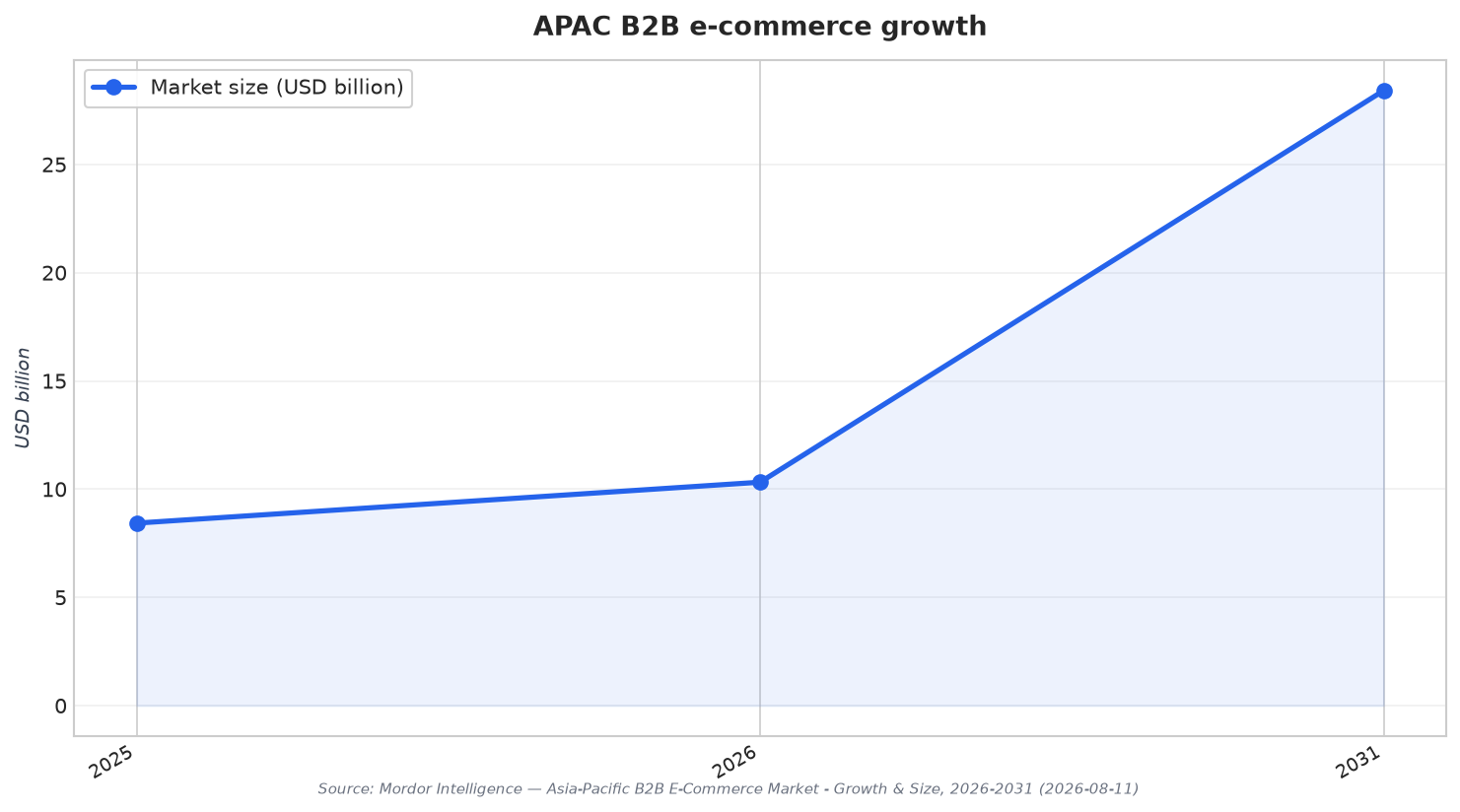
These governance shifts are landing at the same time as B2B commerce digitises at speed across Asia-Pacific. Mordor Intelligence estimates the Asia-Pacific B2B e-commerce market size in 2026 at USD 10.32 billion, up from USD 8.43 billion in 2025, with projections reaching USD 28.41 billion by 2031 at a 22.45% CAGR over 2026–2031. In 2025, marketplace sales represented 77.45% of Asia-Pacific B2B e-commerce market share, while domestic orders controlled 69.20% and cross-border flows were expanding at a 26.1% CAGR to 2031. Payment risk controls also matter. Bank transfers held 47.20% share in 2025, while e-wallets, BNPL, and embedded-finance options are the fastest-rising cluster at 23.9% CAGR. For B2B leaders, this is where ASEAN AI governance business compliance in 2026 becomes operational. AI increasingly mediates onboarding, fraud checks, credit decisions, dynamic pricing, and supplier scoring in these digital flows.
Country readiness will remain uneven, so compliance planning needs to be modular. An assessment of ASEAN Member States found that prior to the ASEAN AI Guide, six out of ten had some form of AI strategy, while Brunei, Cambodia, Lao PDR, and Myanmar had not. By end of 2025, Brunei released an AI Governance and Ethics Guide and gazetted its Personal Data Protection Order 2025, citing the ASEAN AI Guide as key guidance. Cambodia, Lao PDR, and Myanmar continue developing national AI strategies, guided in the interim by broader digital economy strategies. The result for B2B operations in 2026 is clear: build to regional principles, map to local baselines, and prepare for faster institutionalisation as DEFA and national rules catch up with already-operational AI systems.
Which ASEAN documents set the baseline for responsible AI use in business?
What is DEFA expected to change for cross-border B2B operations by end of 2026?
What scale of digital trade makes AI governance a priority in ASEAN?
How does ASEAN AI governance business compliance in 2026 connect to B2B e-commerce growth?
Why do companies need a modular compliance approach across ASEAN member states?