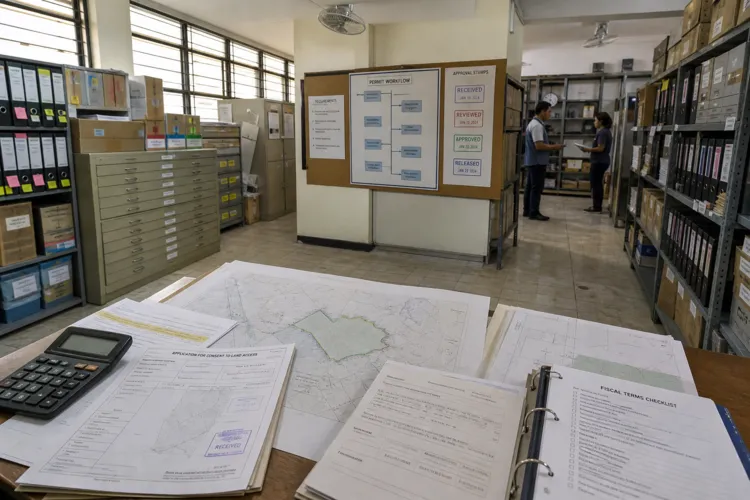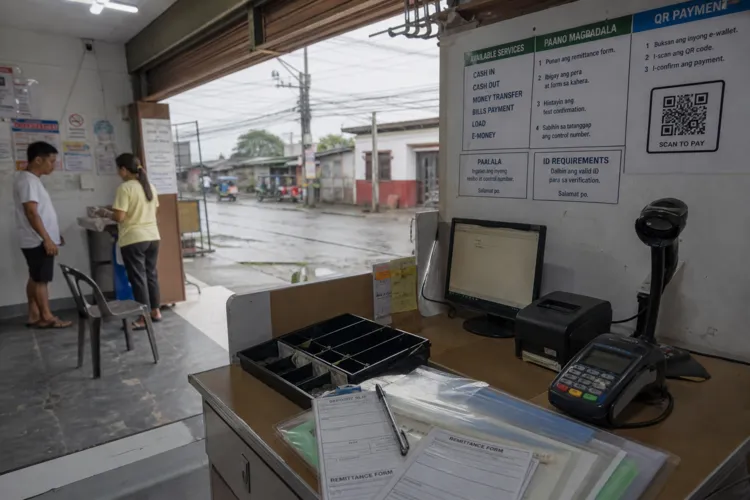

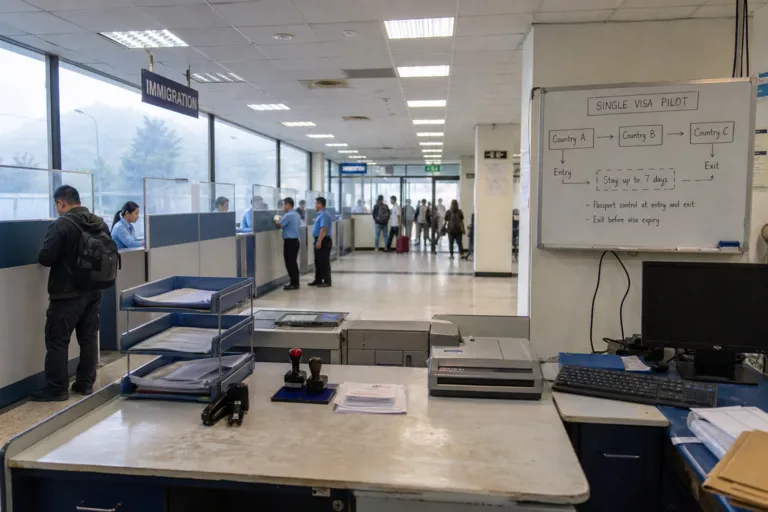
ASEAN’s latest tourism conversation is increasingly defined by a single question: can the region make multi-country travel feel like one destination. Thailand proposed the “Six Countries, One Destination” idea in 2024, later framed within the ASEAN Tourism Strategic Plan (ATSP). Public details have been limited, but the ambition is clear: simplify cross-border movement and reduce repeat visa processes for visitors who currently need separate authorisations. At the Asian Tourism Forum in January 2026, the Philippines’ Tourism Secretary said the ATSP prioritises “seamless access and accessibility” and that visa-free access and unified visas “may be taken up” as a component. For travel sellers, this is a signal to plan for change, while treating any rollout as conditional, staged, and political.
The proposed six-country perimeter is not described identically in every report, which matters for inventory planning and messaging. Thailand’s initial concept, cited to Thailand’s National News Bureau (NNT), focused on Brunei, Cambodia, Laos, Malaysia, Vietnam, and Thailand, with later interest from the Philippines. Travel And Tour World also describes a multilateral zone across Thailand, Cambodia, Laos, Malaysia, Vietnam, and Brunei, and adds diplomatic outreach to Singapore. Other coverage frames a six-nation bloc as Thailand, Malaysia, Vietnam, Cambodia, Laos, and Myanmar. Meanwhile, separate reporting positions a proposed single-visa link across Thailand, Malaysia, Singapore, Vietnam, Laos, and Cambodia. The consistent business takeaway is that “six countries” is the working frame, but the exact membership still appears fluid across sources and diplomatic tracks.
Why 2026 Travel Businesses Must Think Like Border-Tech Companies
Even without a fully operational unified visa, 2026 is already a year of digital border buildout that can reshape the travel funnel. Thailand replaced its late-2024 Electronic Travel Authorization (ETA) proposal with the Thailand Digital Arrival Card (TDAC) program in mid-2025. By mid-2026, TDAC is described as mandatory for nearly all incoming international travellers, producing a unique QR code and enabling low-risk travellers to use automated biometric immigration gates for immediate clearance. Alongside this, Thailand and Vietnam are described as harmonising immigration procedures, aligning entry criteria, digital clearance portals, and mutual visa exemptions. Thailand and Cambodia are also testing joint border management data systems, with shared electronic travel authorizations (ETAs) and interoperable biometric gates at land border crossings. For agencies and OTAs, that points to new pre-travel steps, identity verification touchpoints, and tighter integration between booking and border compliance.
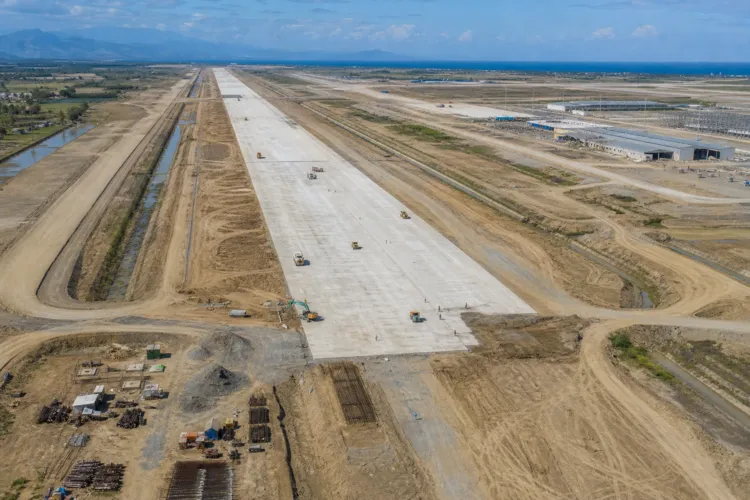
Transport capacity can still override policy ambition, and 2026 offers a blunt example from Vietnam’s aviation market. One report says unexpected airline fleet groundings removed over 13% of Vietnam’s commercial aircraft from service, pushing regional airfares up by 15% to 20%. It also attributes the disruption to global maintenance delays on Pratt & Whitney Geared Turbofan (GTF) engines, stating that 28 commercial aircraft were grounded in Vietnam alone, including 24 Airbus A321neos, three Airbus A350s, and one A320ceo. On the demand side, Civil Aviation Authority of Vietnam (CAAV) data in the same report says the domestic market carried 24.19 million passengers in the first quarter of 2026, up 16.4% year-on-year. For travel businesses, the implication is to package smarter: sell longer stays, overland links, and rail-connected itineraries when short-hop airfare volatility undermines multi-stop plans.
For 2026 positioning, it is essential to separate aspiration from reality. Travel And Tour World states that, as of late September 2026, ASEAN does not have a fully operational Schengen-style common tourist visa. Yet the same piece describes a practical pathway: Singapore and Laos are identified first under a programme where digital identity systems could later interoperate, with Vietnam’s VNeID potentially interacting with Singapore’s Singpass and Laos’ LAeID. Preparatory policy and procedural work is targeted for October, with technical integration and testing scheduled to move forward during late 2026. In parallel, global context shows other regions moving too, such as the GCC preparing for a phased launch of its GCC Unified Tourist Visa through 2027. In this environment, the ASEAN common tourist visa, Schengen-style in 2026, is best treated by travel operators as an investable transition: align content, operations, and partnerships now, while communicating clearly that implementation is still evolving.
Is ASEAN already offering a Schengen-style common tourist visa in 2026?
Which countries are most often mentioned in the “Six Countries, One Destination” proposal?
What is Thailand’s TDAC and why does it matter to travel sellers?
What 2026 aviation constraints could affect multi-country ASEAN itineraries?
How does the ASEAN common tourist visa Schengen-style 2026 discussion connect to digital identity integration?