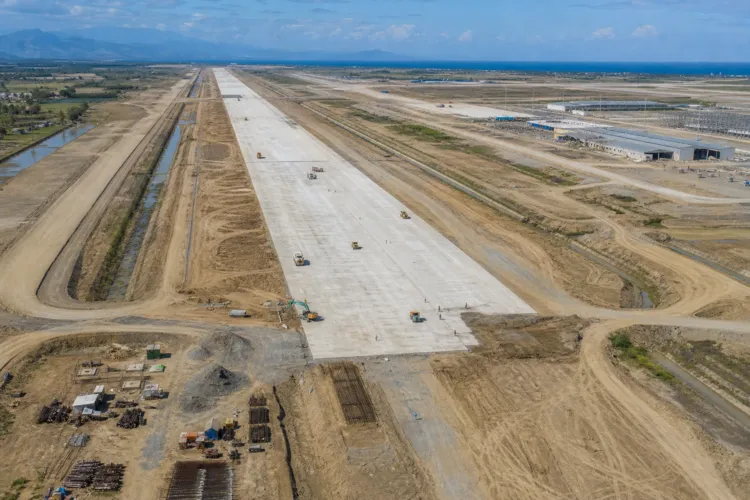

Momentum behind the Philippines warehouse industrial property demand story is becoming clearer as 2026 unfolds. PRIME Philippines reported total warehouse supply at 42 million square meters in 2025, while the occupancy rate stood at 97.1%, with most key regions recording more than 90% occupancy. It also projected supply growth of about 4% to 5% annually in 2026 to 2027. That tight baseline helps explain why developers and occupiers are still moving, even as decisions increasingly weigh operating resilience, congestion, and flood risks when choosing sites near established markets rather than relocating far away.
Pricing and specifications are shifting alongside the space crunch. PRIME Philippines said lease rates jumped 30% last year compared with pre-pandemic levels, driven primarily by the market’s shift toward higher specification requirements. In practice, this includes demand for features such as higher ceiling heights and stronger floor loading, and Colliers also highlighted continued preference for modern warehouses with higher clear heights, improved floor loading, automation readiness, enhanced fire protection, and energy-efficient systems. On the demand side, PRIME Philippines cited wholesale and retail trade, transportation and storage, and manufacturing as the top three warehouse demand drivers in 2025, with requirements generally growing larger as distribution and production networks expand.
Where Growth Is Landing: Corridors, Provinces, and Regional Hubs
Location selection is becoming more nuanced than a simple “near Metro Manila” rule. PRIME Philippines described Laguna as the country’s primary industrial park hub, supported by mature Philippine Economic Zone Authority (PEZA) estates and connectivity to Metro Manila. It also said Cavite emerged as the key expansion market, accounting for around 60% of newly accredited PEZA developments in 2024 to 2025, supported by spillover demand from Laguna and Batangas and proximity-driven site selection. In the north, Real Estate Asia pointed to Bulacan as a pipeline leader among northern provinces, with about 227,000 square meters in development, including around 176,000 square meters expected by Q4 2025 and an additional 20,000 square meters of known developments expected by 2026.
Beyond Luzon, the 2026 outlook also includes stronger regional distribution strategies. PRIME Philippines flagged strategic areas for development across Cavite, Laguna, Rizal, Pampanga, Cebu, and Davao, tying them to accessibility near highways, ports, and economic zones. In Cebu, Colliers said warehouse demand rose in H1 2026 despite higher fuel costs, and it reported that 84% of respondents plan to expand their operations in the Philippines over the next three years, down from 93% in the 2025 survey. The same Colliers view adds an important nuance for 2026 planning: higher fuel and logistics costs can influence site choices as firms look to reduce transportation expenses.
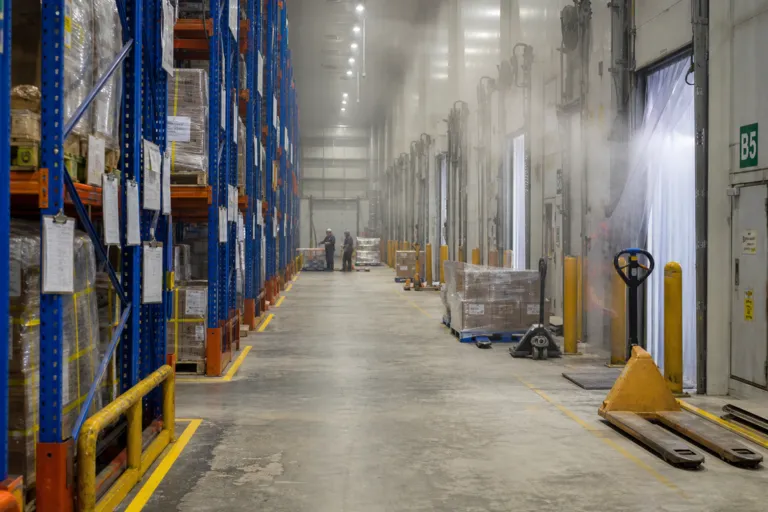
Cold chain and broader warehousing economics add another layer to the surge narrative. PRIME Philippines reported the cold storage sector posted its strongest year of realized supply growth in at least the past decade, bringing total capacity to around 1.2 million pallet positions. At the market level, IMARC Group estimated the Philippines warehousing market reached USD 441.7 million in 2025 and is projected to reach USD 706.8 million by 2034, growing at a 5.20% CAGR during 2026 to 2034. IMARC also reported Luzon held a 62.5% share in 2025, while food and beverages represented a 28.9% end-user share, and general warehousing accounted for 36.8% by facility type.
What is driving Philippines warehouse and industrial-property demand going into 2026?
How tight is the Philippine warehouse market based on the latest occupancy figures?
How fast is warehouse supply expected to grow in 2026 to 2027?
Which areas are highlighted for industrial and warehouse expansion?
What is happening in cold storage capacity in the Philippines?