
Southeast Asia’s role as a “connector” economy between the US and China has supported a trade- and investment-led growth model, but it also creates a vulnerability when policy changes in Washington and Beijing hit indirectly through supply chains. The Lowy Institute describes this connector role as increasingly exposed in a more fragmented, uncertain global economy shaped by US–China competition and economic decoupling. In that environment, semiconductors stand out as a top regional priority because they sit inside advanced-technology supply chains where fragmentation is most intense. For companies planning capacity or vendor shifts, the risk is no longer only where the factory is located. It is how trade rules interpret product origin, upstream inputs, and compliance evidence across the chain.
US trade tools also became more time-sensitive in 2026. JTMAsia reports that US tariff policy shifted significantly after the US Supreme Court held on February 20, 2026 that the International Emergency Economic Powers Act (IEEPA) did not authorize the broad tariffs previously imposed under that statute. The response was a new mix of mechanisms, including Section 122, Section 301, and existing Section 232 authority. The temporary 10% Section 122 import surcharge ran from February 24 to July 24, 2026, while new Section 301 duties began to affect many trading partners, including major Southeast Asian manufacturing economies. The key operational shift is that tariff exposure depends on product classification, country of origin, the applicable trade action, and exemption status, not headline country averages.
Section 232 Chip Tariffs: A 2026 Timeline That Compresses Decisions
BowerGroupAsia warns that Section 232 tariffs for pharmaceuticals, semiconductors, and critical minerals could be announced as early as July, with the second half of 2026 described as “compressed” because multiple tariff instruments converge around that month. The same source notes a 25% tariff is already in place for a narrow set of semiconductors, and that a “Phase 2” could be used to pressure more countries and companies to adopt a more US-aligned technology framework. For ASEAN chip exporters and electronics assemblers, this timing matters because investment, qualification, and customer transition cycles can be longer than the policy window. Planning for possible expansion of Section 232 coverage becomes a commercial necessity, not a scenario exercise.
Country-by-country outcomes in Southeast Asia also look uneven, and they are intertwined with exemptions and enforcement. Informed, clearly reports that Malaysia secured a $70 billion US investment pledge with tariff exemptions on key semiconductor exports, while a 19% baseline tariff remains. The same report calls Malaysia the world’s sixth-largest semiconductor exporter and notes exemptions are pending a national security probe, implying that changes to exemption status could quickly alter landed-cost math. Vietnam’s upside comes with heightened compliance risk: since July 2025, US Customs has imposed a 40% transshipment penalty on any shipment found to have been routed through Vietnam to evade tariffs, with no mitigation or remission available, and this penalty was reissued under CBP HTS code 9903.02.01 after the February 2026 legal transition. Exiger supply-chain data cited in the same report says Vietnam accounts for 80% of shipments from Chinese-owned companies to the US, making it a focal point for enforcement pressure.
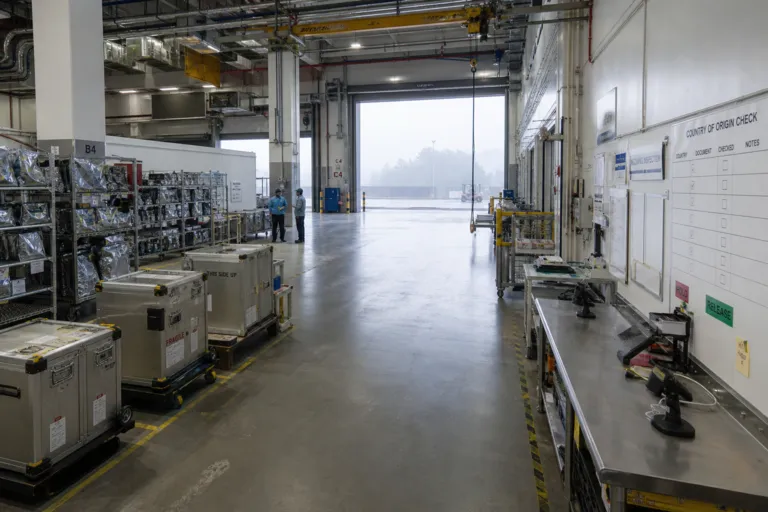
To manage ASEAN semiconductor US tariff exposure, companies need to treat customs analysis as part of the core business case. JTMAsia emphasizes that a factory address in Southeast Asia does not by itself establish low tariff exposure, because product origin depends on the actual production structure and the applicable US rules. It also highlights stronger transshipment scrutiny and the rising importance of bill-of-materials visibility, local production evidence, subcontracting transparency, and origin documentation. Its suggested reassessment process includes confirming classification and trade measures, mapping the real supply chain, verifying local production, reviewing origin evidence, recalculating landed cost, stress-testing the business case, and validating structure through pilot production. In 2026, the “China+1” idea can still work, but only if the supply chain is genuinely independent in how it sources critical inputs and documents transformation.
How could Section 232 tariffs reshape ASEAN semiconductor decisions in 2026?
What changed in US tariff policy in 2026 that affects Southeast Asian supply chains?
Why doesn’t moving final assembly to ASEAN automatically reduce tariff risk?
What specific enforcement risk is Vietnam facing related to transshipment?
How should firms evaluate ASEAN semiconductor US tariff exposure in practice?