
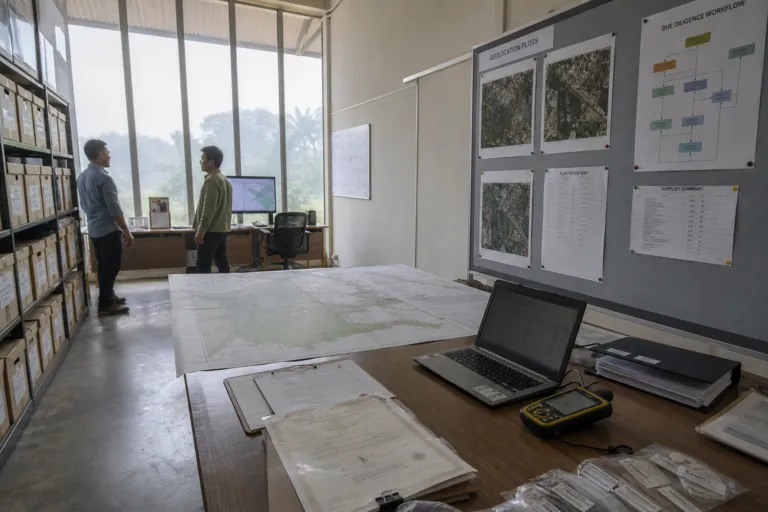
The EU Deforestation Regulation, Regulation (EU) 2023/1115, changes what it takes to sell into Europe. It prohibits placing in-scope goods on the EU market, making them available, or exporting them unless they are deforestation-free, produced legally in the country of origin, and covered by a due diligence statement (DDS). The cut-off date is explicit: products must not come from land deforested or degraded after 31 December 2020. After two postponements, the dates are now set. Large and medium-sized companies must comply from 30 December 2026. Micro and small enterprises have until 30 June 2027. For ASEAN exporters of palm oil, rubber, and coffee, the operational reality is simple: without a valid DDS, goods cannot be placed or circulated on the EU market.
These requirements reach beyond “forest industries.” The EUDR covers seven commodities: cattle, cocoa, coffee, oil palm, rubber, soya, and wood, plus derived products listed in Annex I by customs (HS) code. That scope includes items like tyres, leather goods, chocolate, furniture, charcoal, palm-oil derivatives, and paper packaging. The regulation applies to any company selling into EU markets regardless of headquarters, with examples including Indonesian palm oil processors and Indian coffee exporters. The market pull is significant. One source cites an annual value of EU agri-food imports potentially in scope of EUDR of 2.4 trillion euros (European Commission, 2024). Another notes the EU absorbs roughly 60% of global coffee exports, making EUDR demands a de facto standard for coffee supply chains that depend on Europe.
What “Proof” Means in Practice: Plot Data, Traceability, and DDS
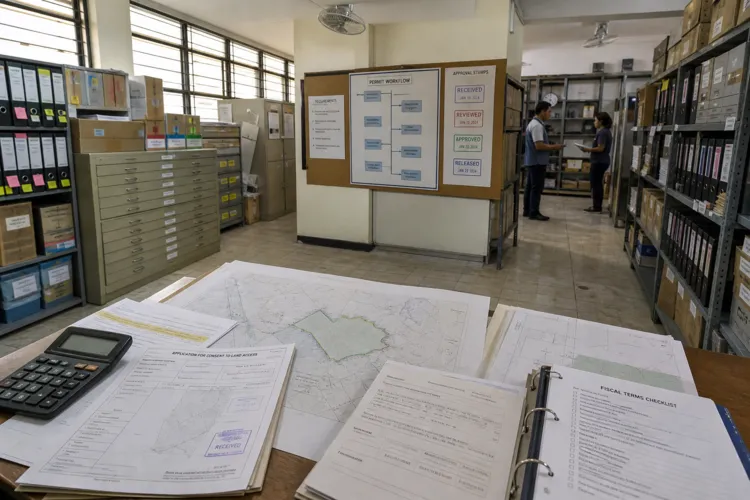
For exporters, “proof” is not a narrative or a certificate file folder. Multiple sources converge on a hard baseline: plot geolocation, evidence of post-2020 no-deforestation, and legality proof, tied to each shipment and then used by EU buyers to file a DDS in the EUDR Information System. Coffee shows how detailed this gets. For plots smaller than 4 hectares, a single GPS point is sufficient. For plots larger than 4 hectares, a georeferenced polygon of the full perimeter is required. The same coffee guidance warns that over 10% of coffee farm polygons submitted to date contain errors, including overlapping boundaries and mislocated coordinates, which then require time and tools to fix. For ASEAN palm and rubber exporters aggregating from many suppliers, the message is the same: if mapping is wrong, the chain breaks at the border.
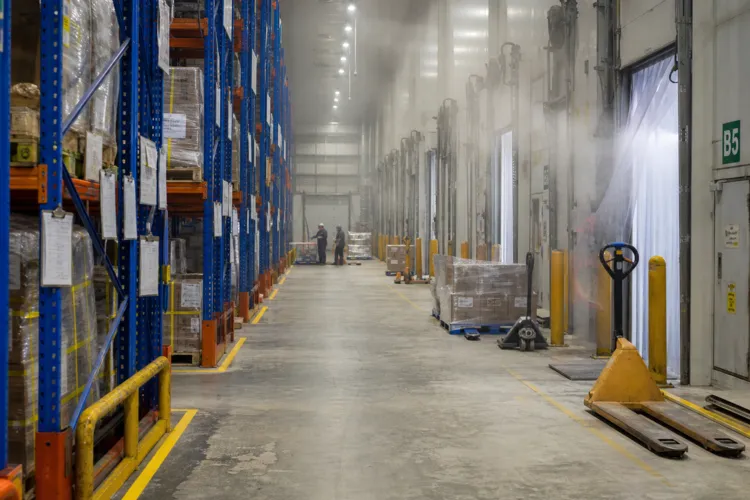
Traceability also has to survive processing and consolidation. Guidance aimed at operational readiness stresses that EUDR-compliant goods must be physically and documentarily separated from non-traceable goods from buying point to warehouse to container, because mixing disqualifies the whole batch. Contracting becomes part of the control system. One legal-focused source recommends writing the duty to supply coordinates, the post-2020 no-deforestation commitment, and audit rights into chain contracts with buying agents and cooperatives. Technology platforms are described as capturing plot geolocation and legality records once, running deforestation checks against the 2020 cut-off, and keeping data attached to each lot through processing so that the importer can file the DDS. The workload concentrates upstream, where exporters can still influence farm-level data quality.
The penalty and disruption risks are material. One source cites a 2025 European Commission survey finding fewer than 30% of businesses in scope had a compliant due diligence system in place. The same briefing warns of shipment seizure, and fines up to 4% of annual EU turnover, plus permanent exclusion from EU markets. Another source reinforces that member states set penalties within the EUDR framework and that fines can reach at least 4% of EU turnover, alongside confiscation of products and revenues and exclusion from public procurement. But it also frames the most immediate “sanction” for a Vietnamese exporter as commercial: without a DDS, the goods cannot be placed on the EU market at all. For ASEAN EUDR deforestation compliance in 2026, the clock is less about documentation at shipment time and more about whether plot data, segregation, and legality evidence are already audit-ready before peak export flows.
When do ASEAN exporters need to be ready for EUDR in 2026?
Which commodities matter most for palm, rubber, and coffee exporters under the EUDR?
What evidence must be included to support a due diligence statement (DDS)?
What makes coffee traceability especially difficult compared with other commodities?
How should companies approach ASEAN EUDR deforestation compliance without relying on spreadsheets alone?