
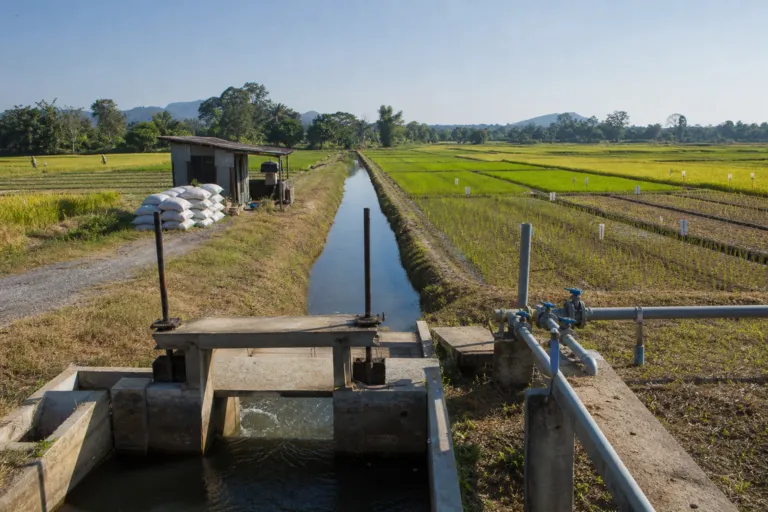
ASEAN agriculture is still a core economic pillar, and that scale is the starting point for today’s food-security investment story. Agriculture contributes about 9% of ASEAN’s GDP and provides jobs for one-third of its people, according to an industry outlook focused on Southeast Asia in 2025–2026. The same outlook describes a shift away from purely traditional farming and toward technology-based, high-value, and sustainable production that can meet food-security needs. It also cites Statista’s projection that the regional market is expected to exceed USD 153 billion by 2025. In this context, ASEAN food security agritech investment is less about novelty and more about strengthening systems that already feed households and support livelihoods.
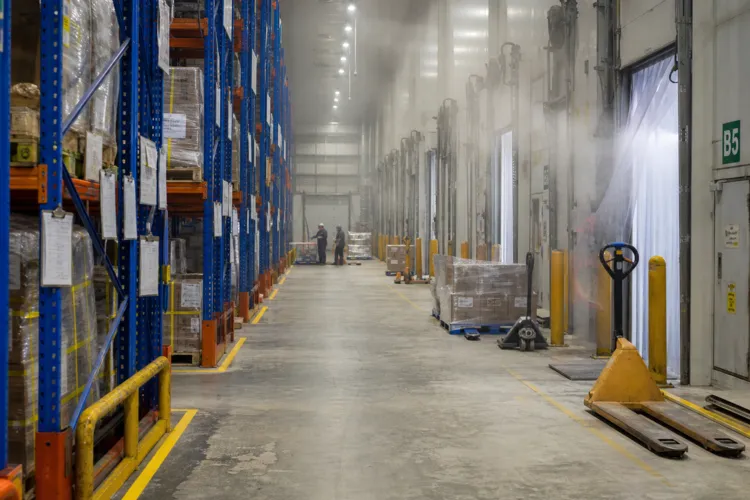
Investors and governments are aiming first at the most visible bottlenecks in food availability and affordability: losses after harvest and the fragility of logistics. Post-harvest losses in Southeast Asia still average 30–40%, and that figure clarifies why cold-chain and farm-to-port upgrades are being prioritized. The same Southeast Asia outlook notes that many governments are investing in cold-storage systems and logistics so farmers can preserve quality and meet export standards, with Vietnam and Thailand leading these improvements, followed by Indonesia’s public-private projects in transport and warehousing. These are food-security investments because they protect volume that is already produced, instead of depending only on yield gains that can take longer to materialize.
Why 2026 Capital Is More Demanding Than the Last Cycle
Across Asia in H1 2026, the pace of scientific and regulatory progress has accelerated, but investor confidence has not simply followed. A regional trends report notes that venture capital into Asia’s agritech sector remained roughly two-thirds below its peak, even as genome-edited crops advanced through institutions and approvals. Another analysis of Asian agritech highlights why scrutiny has sharpened: in Indonesia, eFishery rose to a USD 200 million Series D in 2023 and was valued at roughly USD 1.4 billion, before a forensic review found that for the first nine months of 2024 it had reported USD 752 million in revenue and about USD 16 million in profit when the real figures were about USD 157 million in revenue and a USD 35 million loss. It also found more than 75% of reported revenue was fabricated and only around 6,300 of a claimed 400,000 IoT feeders had actually been deployed.
That tighter capital environment is colliding with genuine technology momentum, which matters for ASEAN because proof from neighboring markets shapes diligence standards. In India, a trends report says two genome-edited rice lines cleared multi-location trials, with the enhanced Samba Mahsuri showing roughly a 19% average yield uplift, and an edited MTU-1010 demonstrating tolerance to saline and alkaline soils. In parallel, a global market report estimates the agritech market at USD 20.5 billion in 2026 and projects it to reach USD 47.5 billion by 2033, a 12.5% CAGR, while pointing to APAC as the highest-growth region in that period. Meanwhile, a food-security study focused on ASEAN concludes that openness to agricultural exports and imports greatly helps improve nearly all aspects of food security in the region, except food stability, where more imports can increase fluctuations in food availability per person.
For ASEAN in 2026, the most bankable food-security investment wave blends three themes already visible in the region’s own outlook: digitisation, sustainability, and infrastructure that moves product efficiently. The Southeast Asia outlook describes modernization through drones, sensors, and data-driven irrigation, plus digital marketplaces that connect farmers directly to buyers. It also emphasizes rising demand for certified and traceable products, with buyers requiring proof of low-carbon sourcing, pushing countries to integrate ESG principles and promote renewable energy on farms. Governments are adding incentives for agritech and food-processing ventures, and public-private partnerships are funding irrigation, training, and digital platforms. The investment message is clear: measurable reductions in loss, verifiable compliance, and scalable logistics are the 2026 pathways from farm output to secure plates.
Why is agritech investment tied so closely to ASEAN food security in 2026?
What supply-chain problem is pushing the biggest wave of upgrades?
What changed investor behavior in Asian agritech going into 2026?
What does research say about trade openness and food security in ASEAN?