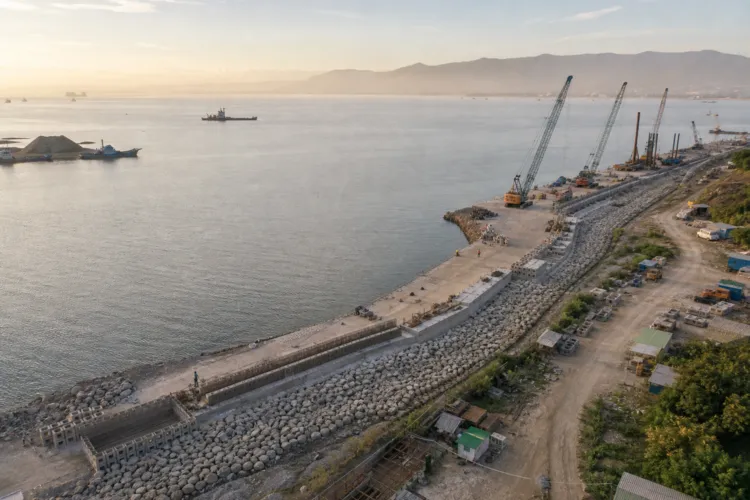
In 2026, Indonesia’s Nusantara (IKN) buildout is increasingly framed as market creation, not only a government relocation. AMANTRA describes the relocation of Indonesia’s capital to Borneo as the largest infrastructure program in Southeast Asia and says the government has reaffirmed a development target that supports Nusantara’s role as Indonesia’s political capital by 2028. That framing matters for contractors and suppliers because a new capital triggers layered demand beyond ministries and offices. It pulls in housing, transportation, telecommunications, healthcare, education, hospitality, retail, utilities, security, and digital infrastructure. For B2B firms, the contracting opportunity becomes a portfolio of interlinked packages, with timing and sequencing risks tied to how quickly the ecosystem forms in East Kalimantan.
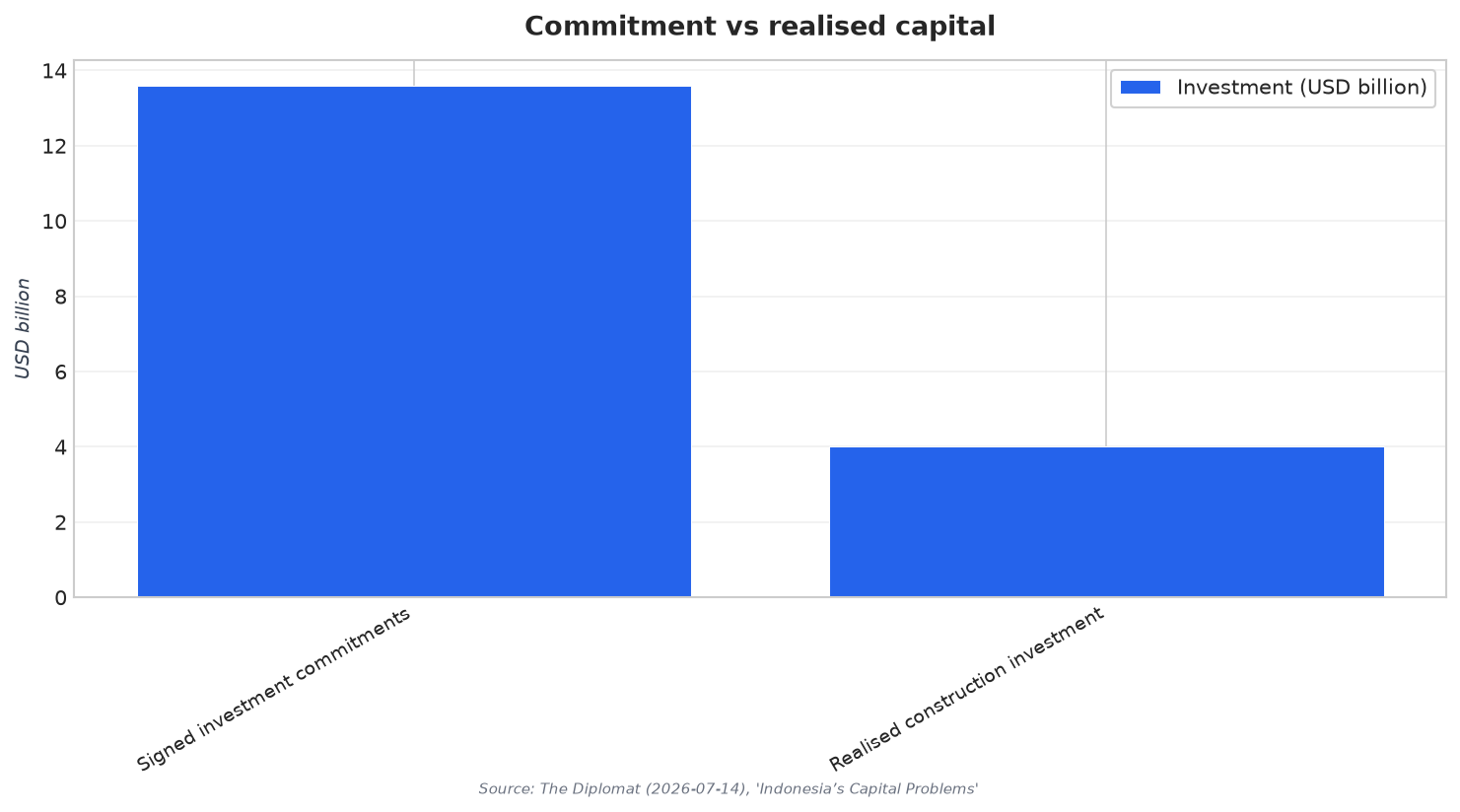
Contractors tracking the Indonesia Nusantara capital project contracts landscape in 2026 have to distinguish between headline commitments and execution on the ground. Viettonkin reports a total project price tag of Rp466 trillion (about USD 32 billion), with 80% expected from private sector funding. It also cites OIKN figures: as of mid-2025, investment commitments from 42 companies total Rp225 trillion (USD 13.8 billion) on paper, while around USD 4 billion has been realized. The Diplomat echoes that gap, describing around USD 13.6 billion in signed commitments but only about USD 4 billion realized in construction, and calls out realized delivery at roughly 15% of what private capital was supposed to provide. For B2B deals, this gap can translate into slower notice-to-proceed cycles, delayed follow-on scopes, and stricter commercial terms.
Where the B2B Contract Pipeline Sits—and Why It Can Still Move
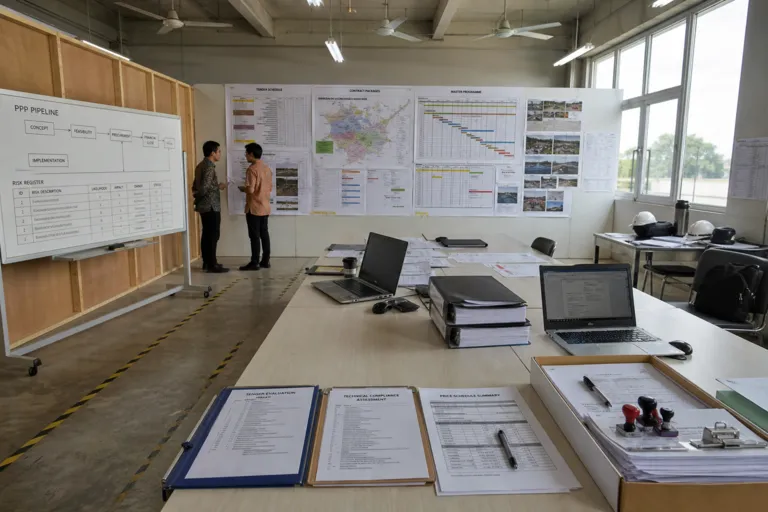
Despite financing questions, the pipeline is concrete enough to create near-term tenders and subcontracting demand. Viettonkin notes OIKN has announced a Rp130 trillion PPP project pipeline, positioning public-private partnership structures as a formal channel for foreign and domestic participation. The same source lists active build items that influence package sizing and specialist procurement, including government office complexes in the Central Government Core Area (KIPP), the Garuda Palace (reported as 95.4% complete), Nusantara International Airport (USD 261 million), the Balikpapan–IKN toll road, and 47 high-rise residential towers for civil servants. Separately, MarkWide Research says Nusantara-specific procurement protocols and domestic content thresholds are evolving, with eligibility shaped by Bappenas strategic designations and rules that can restrict foreign participation in strategic sectors while mandating local content. That combination pushes B2B teams to plan for partner selection, compliance, and bid structuring early.
Budget direction is a core risk input for contract visibility in 2026. The Diplomat cites Indonesia’s budget documents showing the IKN allocation falling from roughly USD 2.7 billion in 2024 to about USD 390 million in the 2026 draft budget, described as an 85% cut. Krungsri’s research compilation also references an allocation of Rp6.26 trillion for IKN in 2026, down from previous years. At the same time, Business Indonesia highlights a wider financing shift in construction: a UGM projection says non-budget-funded projects—particularly PSN and PPP ventures—could make up 82% of Indonesia’s national construction market in 2026, valued at around IDR 698.6 trillion. For Nusantara suppliers, that mix implies that private-financed and PPP-backed packages may be more resilient than those dependent on direct public spending approvals.
Execution risk is not only financial; it is technical and regulatory. MarkWide Research flags geotechnical complexity, noting peatland subsidence across coastal Kalimantan sites and the need for specialized pile foundation techniques that may be unavailable from domestic contractors. That can affect EPC scheduling, change orders, and performance guarantees. Policy-driven procurement constraints can also shape risk allocation. MarkWide points to Ministry of Public Works and Housing restrictions on strategic project bidding and ongoing monitoring needs around domestic content rules. For firms approaching Nusantara in 2026, the most bankable strategy is often to treat the project as a multi-year corridor of contracts—engineering, construction, technology, operations, and maintenance—where partnering models, compliance planning, and realistic cashflow assumptions are as important as winning the first package.
How large is the Nusantara project budget, and how much is expected from private funding?
What is the gap between committed and realized investment in Nusantara?
Which projects indicate near-term contracting demand in Nusantara?
What does the 2026 budget signal for B2B contractors working on Nusantara?
What are the main risks inside Indonesia’s Nusantara capital project contracts in 2026?