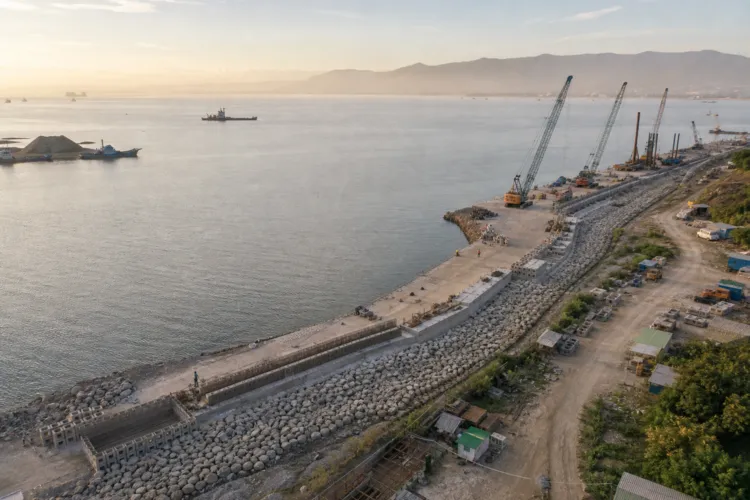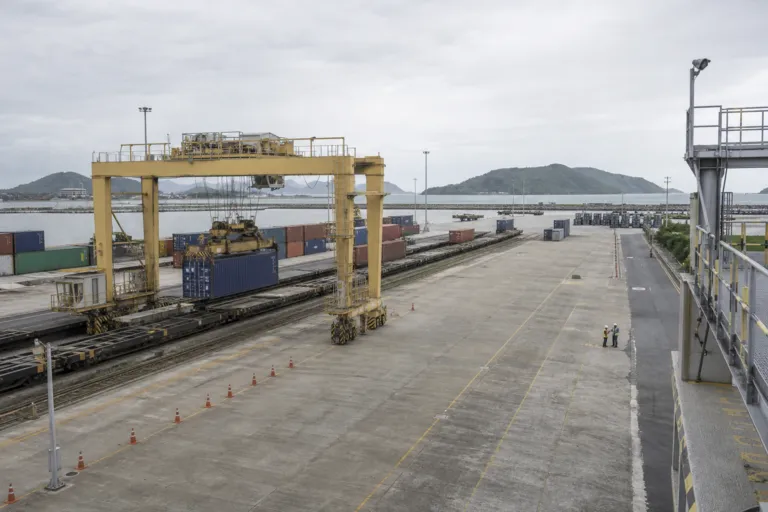
Thailand’s Land Bridge, also called the Southern Land Bridge or the Chumphon–Ranong Corridor, is a proposed overland freight link across the Kra Isthmus that would connect two new deep-sea ports: Ranong on the Andaman Sea and Chumphon on the Gulf of Thailand. The project is framed as a way to bypass the Strait of Malacca, which one source describes as a roughly 900-kilometre route and another notes saw more than 100,000 vessels pass through last year, most of them commercial ships. Cost estimates vary by source, with figures of US$31 billion and US$36 billion cited. Thai leadership has elevated it as an economic agenda item, with Deputy Prime Minister and Transport Minister Phiphat Ratchakitprakarn publicly calling for faster planning in April 2026.
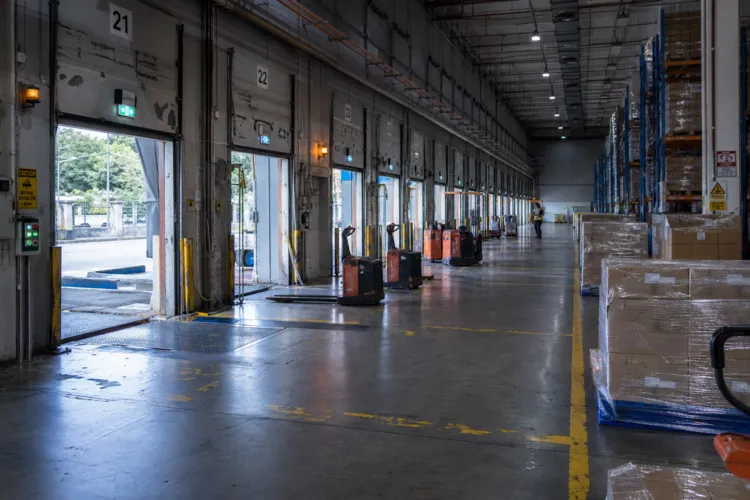
For B2B shippers and logistics buyers, the commercial pitch is about time and route redundancy. A feasibility-focused source says the goal is to reduce shipping time between the Indian and Pacific oceans by up to four days, while also easing exposure to chokepoint disruption. The Thai government has linked urgency to wider shipping risk, pointing to vulnerabilities tied to chokepoints such as the Strait of Hormuz and the Strait of Malacca. But the operating model is not a canal. East Asia Forum stresses that cargo would have to be unloaded from ships, moved across land, and reloaded on the other coast. That introduces handling costs, coordination risk, and potential delays that procurement teams must price into contracts and service-level agreements.
What 2026 Buyers and Investors Must Underwrite
In 2026, the most concrete near-term milestone is process. Multiple sources say a formal cabinet submission is anticipated in June–July 2026. IDNFinancials also reports the government aims to submit then, and adds that the project is valued at around ฿1 trillion. Lexology reports the Thai government expects implementation primarily through private-sector participation and concession-based investment structures rather than direct state financing, and says initial construction phases could commence within the year. That structure matters for B2B players: it implies opportunities for concessionaires, terminal operators, rail and road service providers, and supporting energy infrastructure, including pipelines referenced as part of the concept.
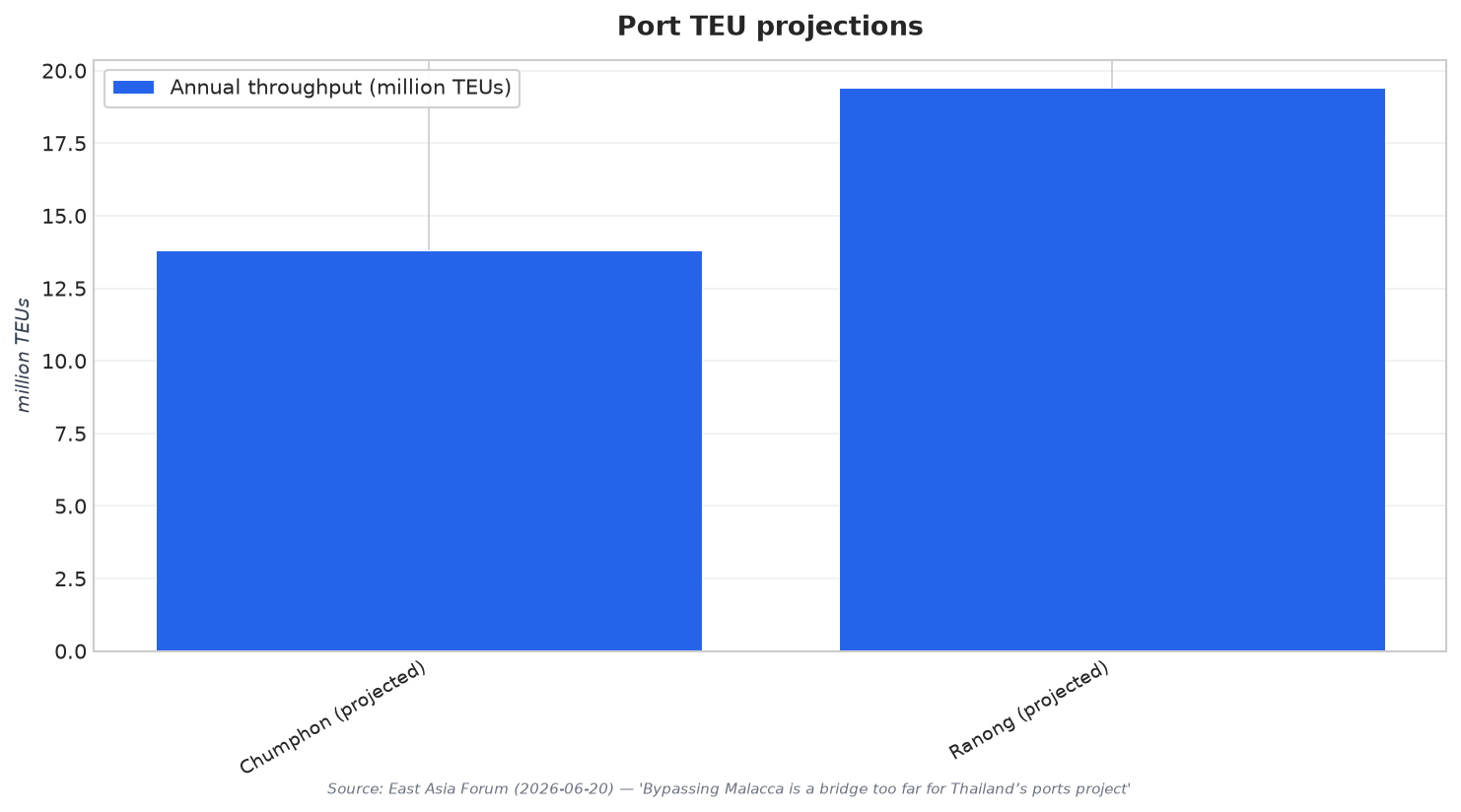
Demand risk is central to any bankability story. East Asia Forum highlights that no major global shipping company has yet committed support and flags fragile assumptions, including an imbalance in projected cargo volumes: Thai reporting cited there projects Chumphon at 13.8 million TEUs annually and Ranong at 19.4 million. Competitive context is also explicit in the sources. Singapore is developing Tuas Port, and the Maritime and Port Authority of Singapore says it will have handling capacity of 65 million TEUs when completed in the 2040s. Malaysia is expanding too, with Westports’ expansion plan raising handling capacity to 30 million TEUs. For route planners, that competition affects pricing leverage, feedering options, and the willingness to change long-established shipping routines that are supported by existing port ecosystems.
Stakeholder and permitting risk is another B2B variable in 2026. Sources note environmental opposition is intensifying and cite concerns over wetlands near the Ranong Biosphere Reserve, fisherfolk livelihoods, and local opposition in Ranong and Chumphon, alongside warnings about risks to reserved forests, national parks, and Ramsar-linked wetlands. At the same time, Singapore is positioned in the narrative both as a key node at Malacca’s southern end and as a potential investor. Straitmalacca.com reports that Singapore’s Coordinating Minister for Public Services, Chan Chun Sing, met Thai Prime Minister Anutin on April 27, 2026, and that a Thai government spokesperson said Singapore had “expressed interest but had not yet committed to any specific role.” For B2B decision-makers, that mix of interest, uncertainty, and scrutiny defines the Thailand Land Bridge megaproject 2026 as a negotiation-heavy, risk-priced procurement story rather than a settled trade-lane shift.
What is Thailand’s Land Bridge intended to do in 2026?
How long is the overland corridor and what infrastructure is included?
When is Thailand expected to submit the Land Bridge proposal to the cabinet?
What are the key demand and competition concerns for shippers?
What are the B2B stakes in the Thailand Land Bridge megaproject 2026?