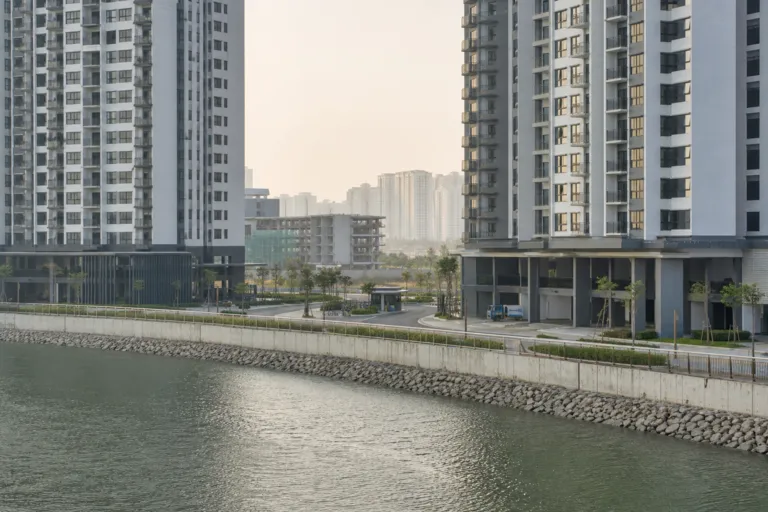
Forest City is an integrated property development on reclaimed land in Iskandar Puteri, Johor, Malaysia. It was officiated in 2016 and is a joint venture in which Country Garden-linked CGPV holds 60% of shares and Johor’s KPRJ holds 40%. The project’s early positioning leaned heavily toward foreign demand, with sales targeted at upper-middle-class buyers from China. That strategy later faced headwinds as sales momentum from China collapsed after stronger currency controls, and sentiment weakened further during the 2020–2022 Malaysian political crisis and the COVID-19 pandemic. By 2022, the development was widely described as a “ghost town,” leaving a trust gap that 2026 initiatives now need to close.
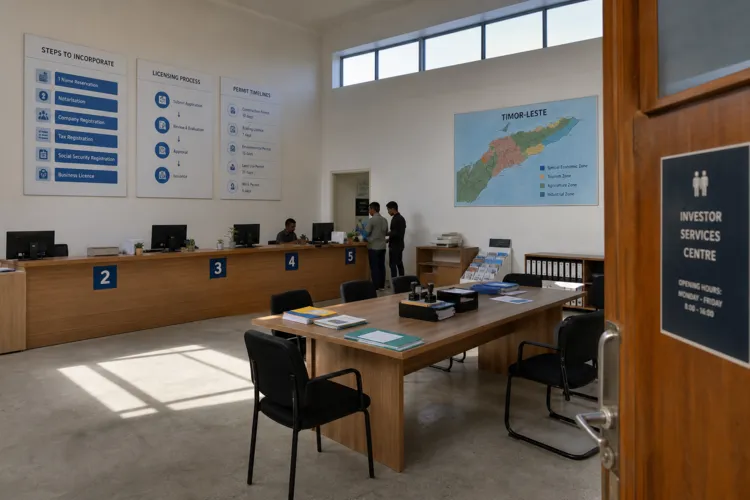
In the Malaysia JS-SEZ Forest City revival 2026 conversation, the key shift is not marketing, but policy designation. Since 2024, Forest City has been gazetted as a Special Financial Zone and described as Malaysia’s first tax-free Special Financial Zone, aimed at attracting global business services, banking institutions, and financial technology companies. That SFZ move is tied to the broader Johor-Singapore Special Economic Zone (JS-SEZ) framework, with the JS-SEZ agreement signed in January 2025. The development is also being framed in 2026 as a residential and commercial hub positioned for cross-border connectivity and investor confidence that extends beyond domestic political cycles.
What 2026 Traction Looks Like: Leasing, Residents, and Pipelines
Several measurable indicators point to activity returning, even if the longer-term outcome is still uncertain. One 2026 update says Forest City now has close to 20,000 residents. On the commercial side, asking office rents were reported to rise from RM1.50 to RM5.50 per sq ft, a 267% increase, while the first 50,000 sq ft of commercial space reached 59% occupancy. Investment facilitation metrics are also being highlighted: in the first four months of 2026, IMFC-J recorded 48 investment enquiries related to the Forest City SFZ, with potential value estimated to reach several billion ringgit and an annual target of RM2 billion expected to be surpassed. Separately, IMFC-J reported receiving 1,000 investor enquiries and facilitating RM73 billion in potential investment.
Connectivity and cross-border execution are central to the 2026 thesis. The Johor Bahru-Singapore Rapid Transit System (RTS) Link is scheduled for completion in late 2026, and another update says passenger service is targeted by the end of 2026. Forest City has also pointed to long-stay and investor demand through immigration-linked channels, reporting 593 applicants approved for the SFZ category of the Malaysia My Second Home programme between 1 October 2024 and 31 March 2026. For sustainability-sensitive capital, Forest City has published environmental figures including 2.86 million m² of green space, a programme that supported restoration of 9 km of mangroves along the Johor coastline, and 40+ international awards, positioning those metrics as verifiable proof points rather than slogans.
Still, a revival depends on whether incentives and infrastructure can translate into durable, lived-in demand. An investment review describes Forest City as polarizing, framed as either a “RM100 billion city-of-the-future” or a major failure, while noting structural challenges associated with building a city “where nobody lives.” On paper, that same review lists a planned population of 700,000 residents at full buildout and says Island 1 is partially developed with approximately 30+ residential towers completed, while Islands 2–4 remain largely undeveloped. The JS-SEZ master plan is described as targeting accelerated growth across 11 key sectors and aiming to contribute RM260 billion to Johor’s GDP by 2030. In 2026, Forest City’s path from label-driven “ghost city” to function-driven growth zone hinges on execution against those timelines and targets.
What changed the outlook for Forest City ahead of 2026?
What signs suggest Forest City is no longer just a “ghost city” in 2026?
How does the Malaysia JS-SEZ Forest City revival 2026 story connect to transport links?
What is the government target for the Forest City SFZ in 2026?
What environmental metrics has Forest City highlighted in 2026?