Indonesia’s biodiesel market in 2026 functions less like a typical consumer market and more like a policy-built supply chain. Blending rates are mandated, a subsidy framework is set, and a CPO export levy is used to fund the price gap between biodiesel and fossil diesel. That structure makes demand directionally predictable because volumes follow diesel consumption multiplied by the mandated blend rate. It also makes the system sensitive to enforcement and the adequacy of levy-funded subsidies, especially when diesel demand cycles shift across transport, mining, agriculture, and power generation.
Under the B40 framework, diesel sold domestically must contain 40% palm-based biodiesel, produced as fatty acid methyl ester (FAME) from crude palm oil (CPO) and palm fatty acid distillate (PFAD). Indonesia consumed 3.9 million kiloliters of palm-based biodiesel from January 1 to April 13, 2026, according to an energy ministry official cited by Hydrocarbon Processing. The annual allocation under the B40 mandate is 15.65 million kiloliters for 2026. APROBI projected 2026 B40 biodiesel demand at 15.4 million to 15.62 million kiloliters, aligning with S&P Global’s reported 2026 production quota of 15.646 million kiloliters.
What B40 Changes Across Palm, Processing, and Fuel Distribution
For palm and procurement teams, each step up in blending removes more CPO from export channels and redirects it into domestic fuel production. Palmoileconomics describes the mechanism simply: higher mandated blend rates translate into higher CPO needs, assuming diesel consumption holds. The subsidy design links that shift directly to exporters through a levy on CPO exports that funds the biodiesel price difference, with revenues rising when export prices are higher and shrinking when prices fall. The result is a palm-to-fuel chain where landed costs and supply tightness can be driven more by mandate settings than by voluntary demand.
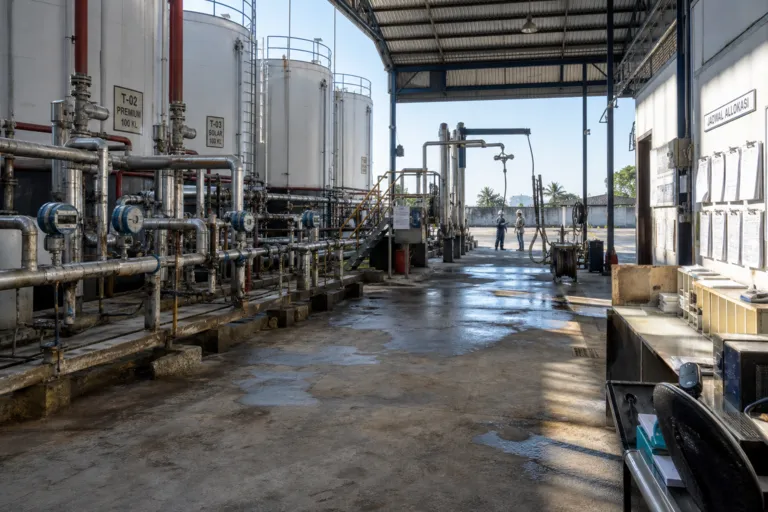
On the supply side, industry and analysts point to capacity being available while feedstock becomes the strategic constraint. IndexBox estimates biodiesel production capacity at roughly 14–18 million kiloliters per year across more than 20 registered plants, implying utilization around 70–85% depending on enforcement and export demand. APROBI reports 26 domestic producers with installed capacity of 22.02 million kiloliters. IndexBox also flags that palm oil output growth has slowed to low-single-digit rates, meaning biodiesel competes with food and oleochemical demand for the same CPO pool. In practice, that makes allocation decisions, levy funding, and feedstock sourcing central to 2026 planning.
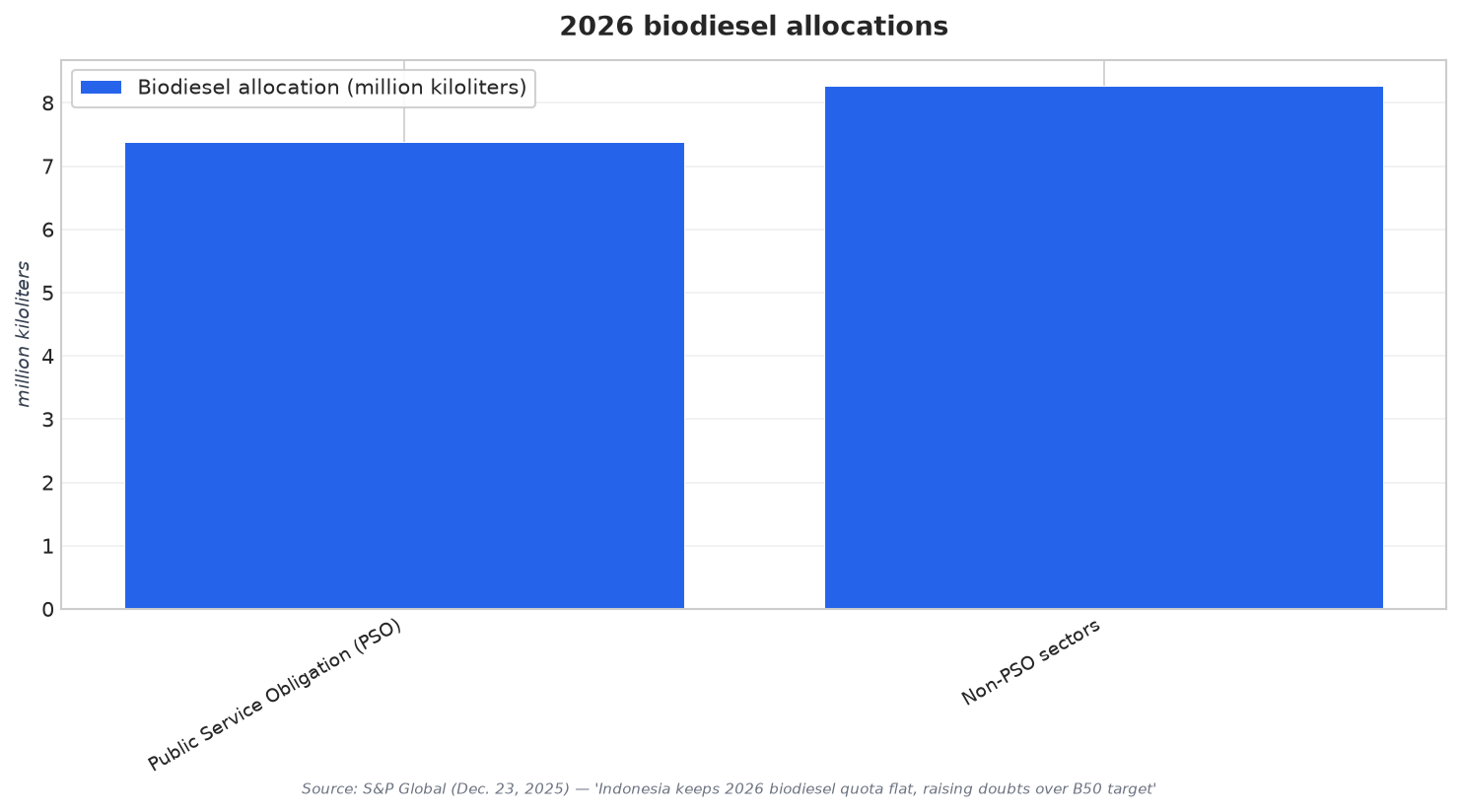
Policy ambitions beyond B40 add another layer of supply-chain uncertainty in 2026. Discoveryalert reports Indonesia is operating under a B40 mandate and that oil price volatility is a key catalyst for mandate increases, with historical analysis linking increases to sustained crude pricing above $85 per barrel. It also notes crude prices approaching $100 per barrel after geopolitical tensions in February 2026 and cites Deputy Energy Minister Yuliot Tanjung saying B50 implementation could occur in the second half of 2026, contingent on continued oil price elevations. Yet S&P Global reported Indonesia kept the 2026 quota largely unchanged from 2025, raising questions among traders about execution pace even as President Subianto said the government will begin by ending diesel imports from 2026. Within the 2026 allocation, S&P Global details 7.38 million kiloliters for subsidized PSO and 8.265 million kiloliters for non-PSO sectors, a split that shapes who bears costs and how distribution and compliance are prioritized.
How is the Indonesia B40 biodiesel mandate in 2026 structured?
What is Indonesia’s 2026 biodiesel allocation under B40?
How much biodiesel did Indonesia consume early in 2026?
How is the biodiesel subsidy funded in Indonesia’s mandate system?
Is Indonesia moving from B40 toward B50 in 2026?