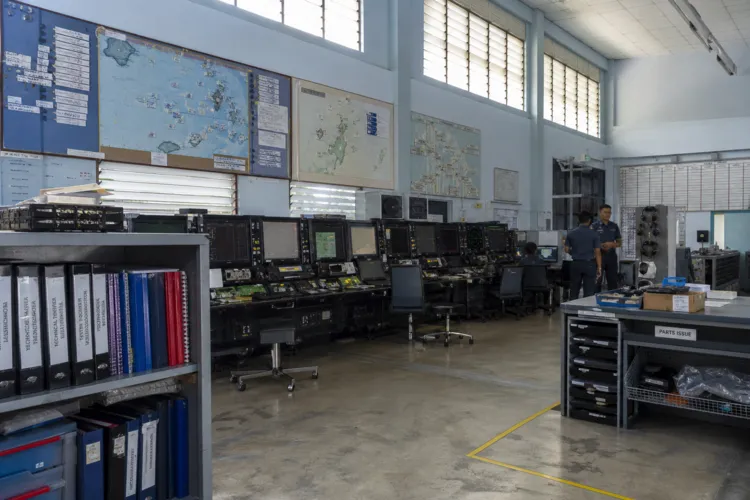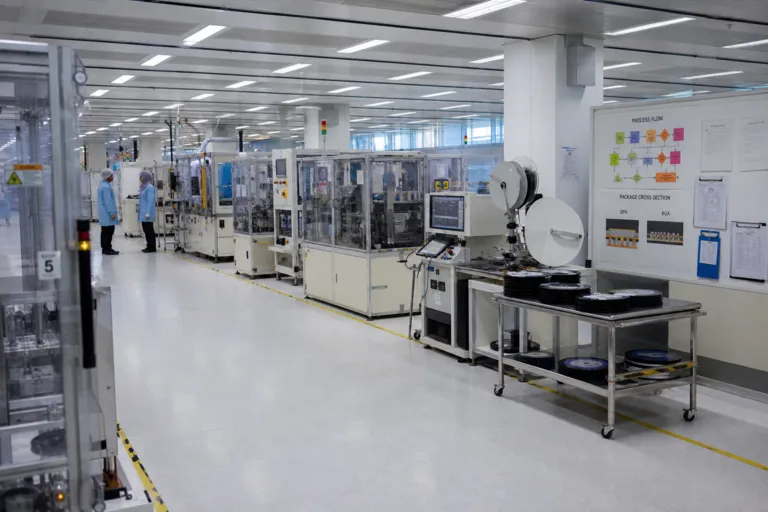
Malaysia’s semiconductor story started with assembly pragmatism and grew into global scale. Intel’s first manufacturing facility outside the US began as a 5-acre (2-hectare) assembly plant in Penang in 1972, and by 1975 it employed roughly 1,000 people. That early OSAT-led cluster compounded over decades. Today, Malaysia accounts for nearly 13% of the worldwide outsourced semiconductor assembly and test (OSAT) market, and OSAT makes up around 40% of the nation’s export output. This starting point matters for any Malaysia integrated circuit design 2026 discussion, because the country’s baseline strength is still backend manufacturing, not the front-end design economics.
External forces are also reshaping the opportunity set. McKinsey’s MGI described a global trade system that is “reconfiguring,” with goods, capital, and investment rerouting through neutral “middle-line” economies, a category it places ASEAN in. MGI also noted physical distance between trading partners growing by roughly 6% as routes shift. In parallel, investors are looking harder at resilience after the 2021 Covid-induced chip shortage, alongside the impact of US-China export controls and accelerating tariffs. For Malaysia, this context can pull more work into the country. But it does not automatically create local design champions, which require capabilities beyond OSAT execution.
What Changes in 2026: IP Access, Engineers, and Advanced Packaging Scale
Policy and platform moves in 2026 are explicitly designed to widen Malaysia’s design base. Under the National Semiconductor Strategy (announced in 2024), Malaysia set out RM 25 billion across three phases, targeting RM 500 billion in investment, training 60,000 engineers by 2030, and establishing at least ten local design and advanced packaging companies. In March 2026, Malaysia signed a MYR 1.11 billion (USD 250 million) 10-year partnership with Arm Holdings, granting access to Arm’s IP and compute subsystems, targeted training for 10,000 IC design engineers, and opening Arm’s first ASEAN office in Kuala Lumpur. At SEMICON SEA 2026, Malaysia also confirmed 32 Arm chip design licenses, a concrete indicator of intent to expand beyond packaging and test.
At the same time, Malaysia is raising the sophistication ceiling of its backend. Intel’s advanced packaging complex in Penang carries a MYR 12 billion (USD 2.71 billion) commitment and was reported as 99% complete ahead of first-phase operations in 2026. Chipbond opened a MYR 800 million (USD 200 million) advanced OSAT facility in Batu Kawan in February 2026, with wafer bumping, wafer-level chip-scale packaging, and flip-chip capability, plus an initial capacity of 10,000 wafers and 100 million WLCSP units per month. These projects matter for design because advanced packages and yield control requirements can pull engineering closer to product definition. But they can also lock talent into manufacturing priorities unless Malaysia builds enough IC design throughput to match the packaging momentum.
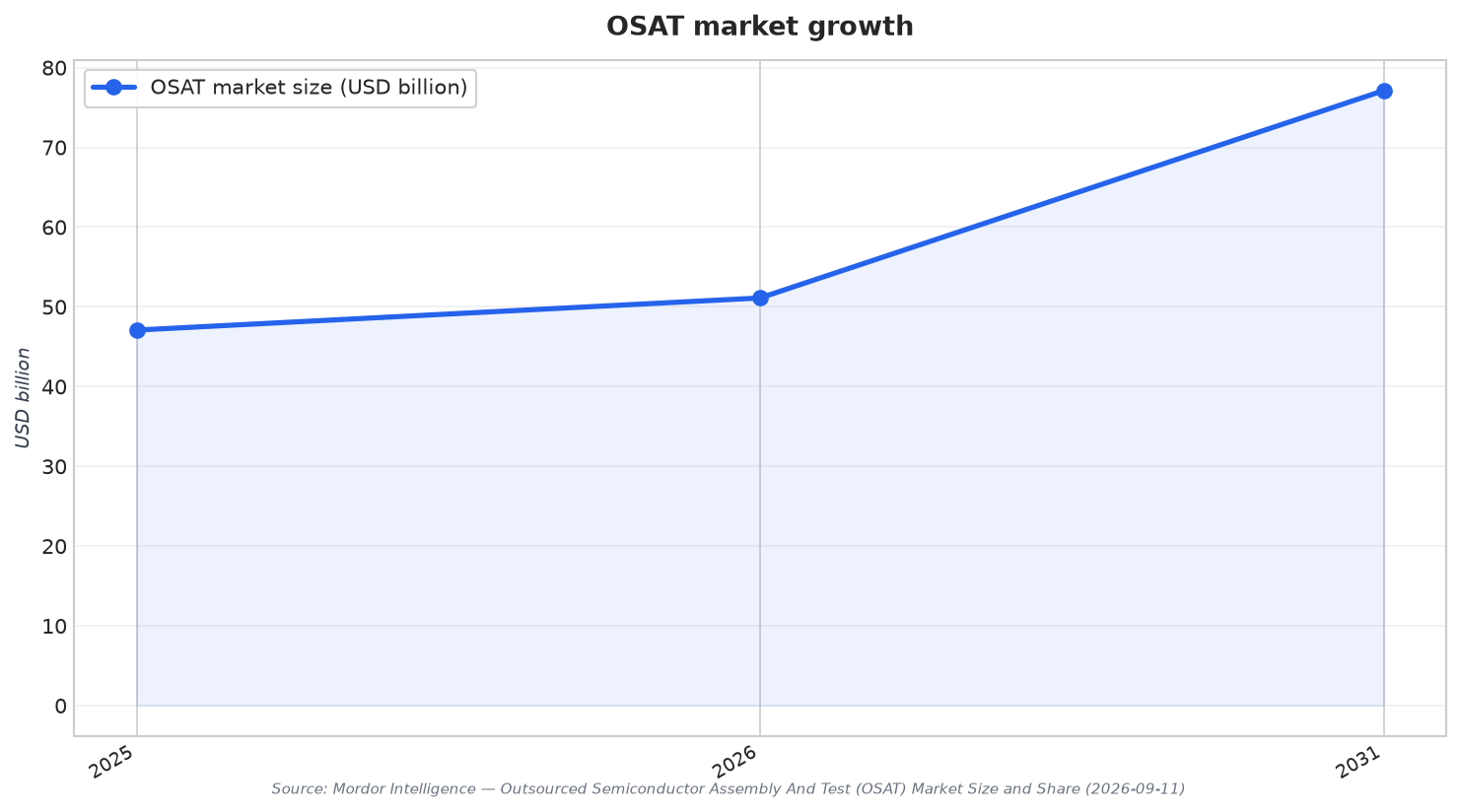
Market structure reinforces why “moving up” is hard. Traditional packaging such as wire bonding is commoditised and labor-sensitive, and Amkor Technology reported gross margins of roughly 15% in recent quarters, illustrating the manufacturing-style economics that can dominate OSAT. Yet OSAT itself is expanding: Mordor Intelligence valued the global OSAT market at USD 47.09 billion in 2025, estimated USD 51.12 billion in 2026, and projected USD 77.12 billion by 2031, at an 8.56% CAGR (2026–2031). Asia-Pacific held 72.90% revenue share in 2025. Malaysia’s path to higher value may therefore be a “bridge strategy”: deepen advanced packaging and test while using the Arm partnership, the 32 licenses, and NSS engineer training targets to build repeatable integrated circuit design output that can anchor local companies, not only expand subcontracted manufacturing.
Can Malaysia move beyond OSAT into higher-value chip design in 2026?
What concrete steps support Malaysia’s integrated circuit design push in 2026?
How big is Malaysia’s current OSAT position, and why does it matter?
Which 2026 investments raise the bar for advanced packaging capability in Malaysia?
What do OSAT economics imply for the shift toward high-value work?