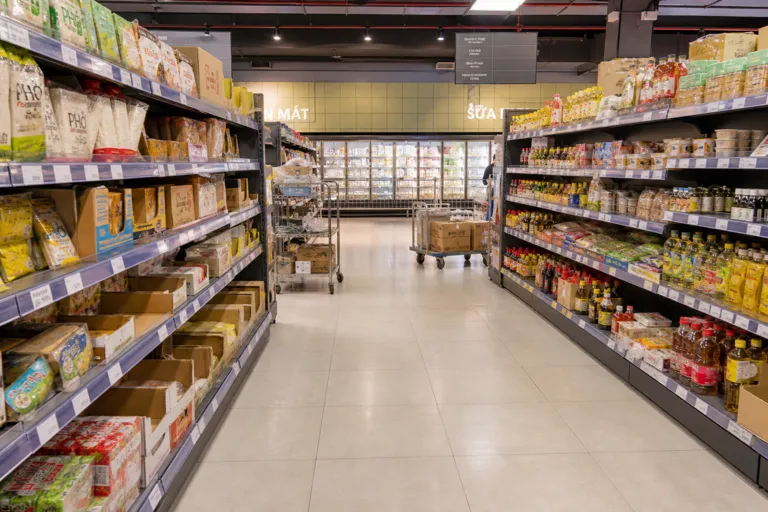
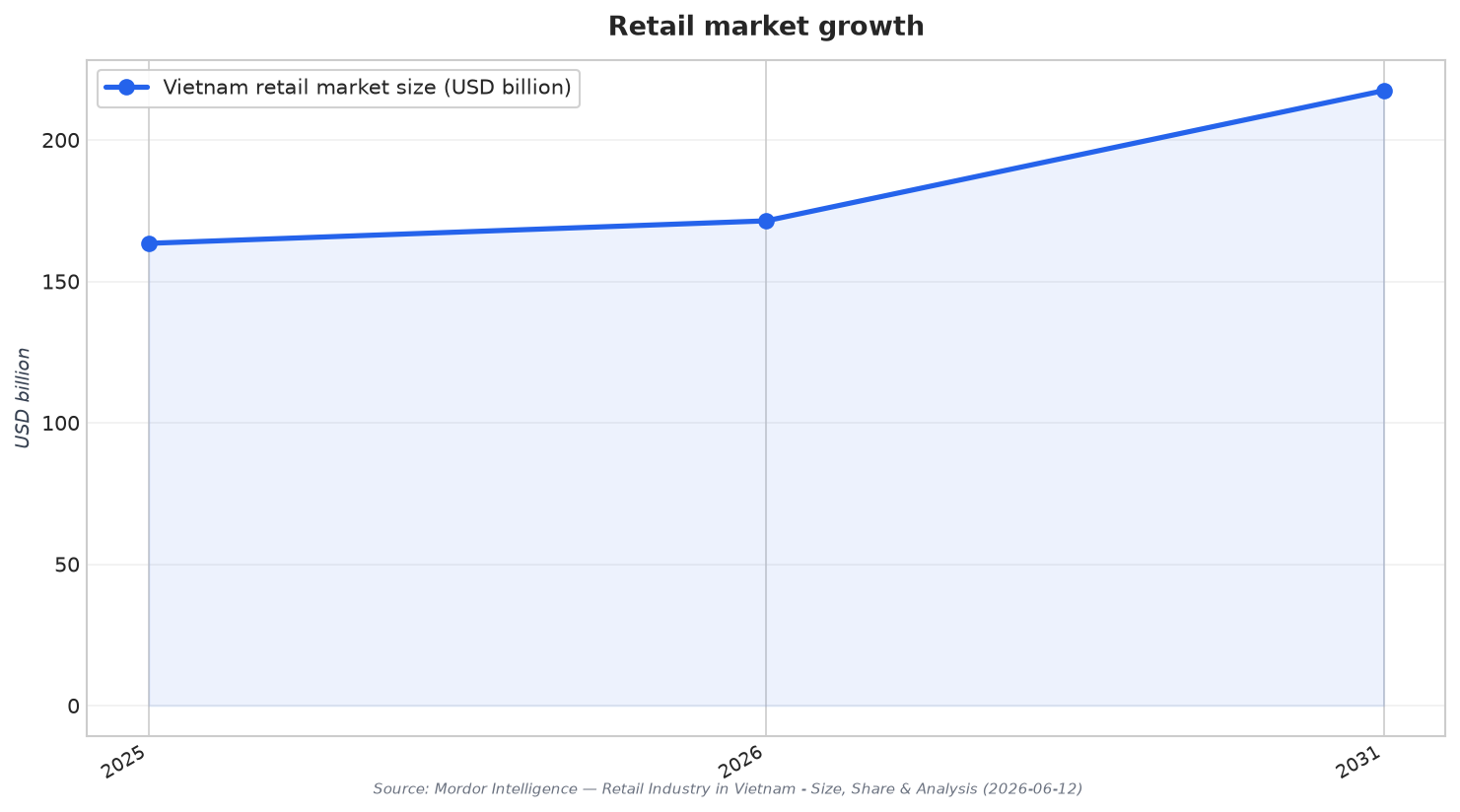
The shelf-space fight in Vietnam is not only about opening more doors. It is also about controlling what shoppers see, trust, and repurchase in each trip. Mordor Intelligence projects the Vietnam retail market to expand from USD 171.40 billion in 2026 to USD 217.44 billion by 2031, a 4.87% CAGR from 2026 to 2031. That same view frames 2026 as a consolidation phase after the post-pandemic rebound. Growth is shifting from volume to value as urban cores near saturation and chains prioritize margin defense. In that environment, grocery execution becomes the frontline, because Food, Beverage & Tobacco held 48.35% of retail market share in 2025.
Supermarkets show how scale is already material. Ken Research estimates Vietnam’s supermarket market value at USD 5,850 million in 2024, rising from USD 3,890 million in 2019, implying an 8.5% historical CAGR. By 2024, the channel reached 1,285 million shopping transactions, which signals that demand is no longer concentrated only in flagship hypermarkets. The same source projects a 10.2% CAGR for 2025 to 2030, reaching about USD 10,450 million by 2030, with a base scenario of USD 9,480 million by 2029 and roughly 2,010 million transactions. These figures matter for shelf strategy. More transactions mean more micro-decisions at the shelf, and more pressure on retailers to make assortments earn their space.
What “Shelf Space Wars” Means in 2026: Assortment, Origin, and Omnichannel
Modern grocery shelf space in Vietnam is also being reshaped by a domestic-product push and by shoppers demanding clearer quality signals. B&Company notes that Vietnamese agricultural and food products account for about 85–90% of shelf space in many modern retail chains of Saigon Co.op, reinforced by government programmes promoting domestic consumption. At the same time, consumers are increasingly quality- and experience-oriented, with brand reputation, product origin transparency, and quality moving up priorities. Omnichannel behavior reinforces the pressure: supermarkets that remain offline-only risk losing ground if they do not integrate online services, including app-based promotions and personalized communications.
Convenience formats intensify competition for quick trips and impulse missions, often forcing supermarkets to defend share through fresher ranges and sharper pricing architecture. Mordor Intelligence estimates convenience stores had a 32.32% share by format in 2025 and forecasts 6.35% CAGR through 2031. Traditional mom-and-pop stores still held 59.35% of retail channel share in 2025, but e-commerce and hybrid models are projected at 5.75% CAGR for 2026 to 2031. This is where Vietnam modern retail grocery expansion 2026 becomes tangible: shelf space decisions now have to work across physical aisles, click-and-collect logic, and digital discovery, while still matching dense urban living and “quick-trip” needs.
City economics and inflation pressures make the shelf battle even more tactical. Ken Research anchors demand to Vietnam’s 101.1 million population and 38.6 million urban residents in 2024, with the urban population expanding at 3.06% annually during 2019 to 2024. Ho Chi Minh City alone recorded VND 1,206.4 trillion in total retail sales of goods and services in 2024, and AEON opened its first Ho Chi Minh City super supermarket in April 2024 plus its 8th General Merchandise Store in Vietnam in September 2024. Ken Research also reports a 3.31% CPI increase in 2025, which disproportionately affects lower-income consumers and can compress margins when input costs rise faster than shelf prices. The winners in 2026 will be the retailers and brands that earn space by balancing value cues, credible origin stories, and efficient omnichannel fulfillment.
How fast is Vietnam’s retail market expected to grow after 2026?
What do the supermarket forecasts suggest about shelf competition?
How much shelf space is dedicated to domestic products in some modern chains?
What role do convenience stores play in Vietnam’s modern grocery expansion in 2026?
What macro signals matter most for Vietnam modern retail grocery expansion in 2026?