Mandatory digital tax rules are reshaping how B2B operations run across ASEAN. Channel Tech Asia frames the shift clearly: the move from PDF and paper invoices to machine-readable, signed e-invoices is no longer a future topic; it is a live compliance and operational issue for every SME that charges VAT/GST. In practice, this means invoicing becomes a governed data process, not a document handoff. Procurement, accounts receivable, and tax reporting workflows are being redesigned to support standardized electronic reporting intended to reduce fraud, speed tax collection, and improve compliance.
This compliance wave is arriving while Asia-Pacific B2B trade is becoming more digital and more platform-led. Mordor Intelligence estimates the Asia-Pacific B2B e-commerce market at USD 10.32 billion in 2026, up from USD 8.43 billion in 2025, with a 22.45% CAGR forecast for 2026–2031 and a 2031 projection of USD 28.41 billion. In 2025, marketplaces accounted for 77.45% of market share and bank transfers were 47.20% of payment method share, while cross-border flows are forecast to expand at a 26.1% CAGR to 2031. As these digital transactions scale, tax teams face more pressure to reconcile invoices automatically, validate signatures, and keep consistent records across systems.
What “Mandatory” Means for B2B Operations: From ERP Data to Tax Portals
ASEAN rules are not identical, but the operational pattern is converging: generate structured invoice data, apply required digital signing, and transmit to tax authority platforms using the prescribed formats. Channel Tech Asia highlights Indonesia’s Directorate General of Taxes e-invoicing program (commonly known as e-Faktur), which requires authenticated electronic submission of VAT invoices through certified channels. It also notes that Vietnam and Thailand operate national electronic invoice systems with requirements for digital signing and transmission to tax authority platforms, while technical formats and processes differ by jurisdiction. For multi-country sellers, this pushes standard field mapping, integration testing, and exception handling into core operations, not year-end projects.
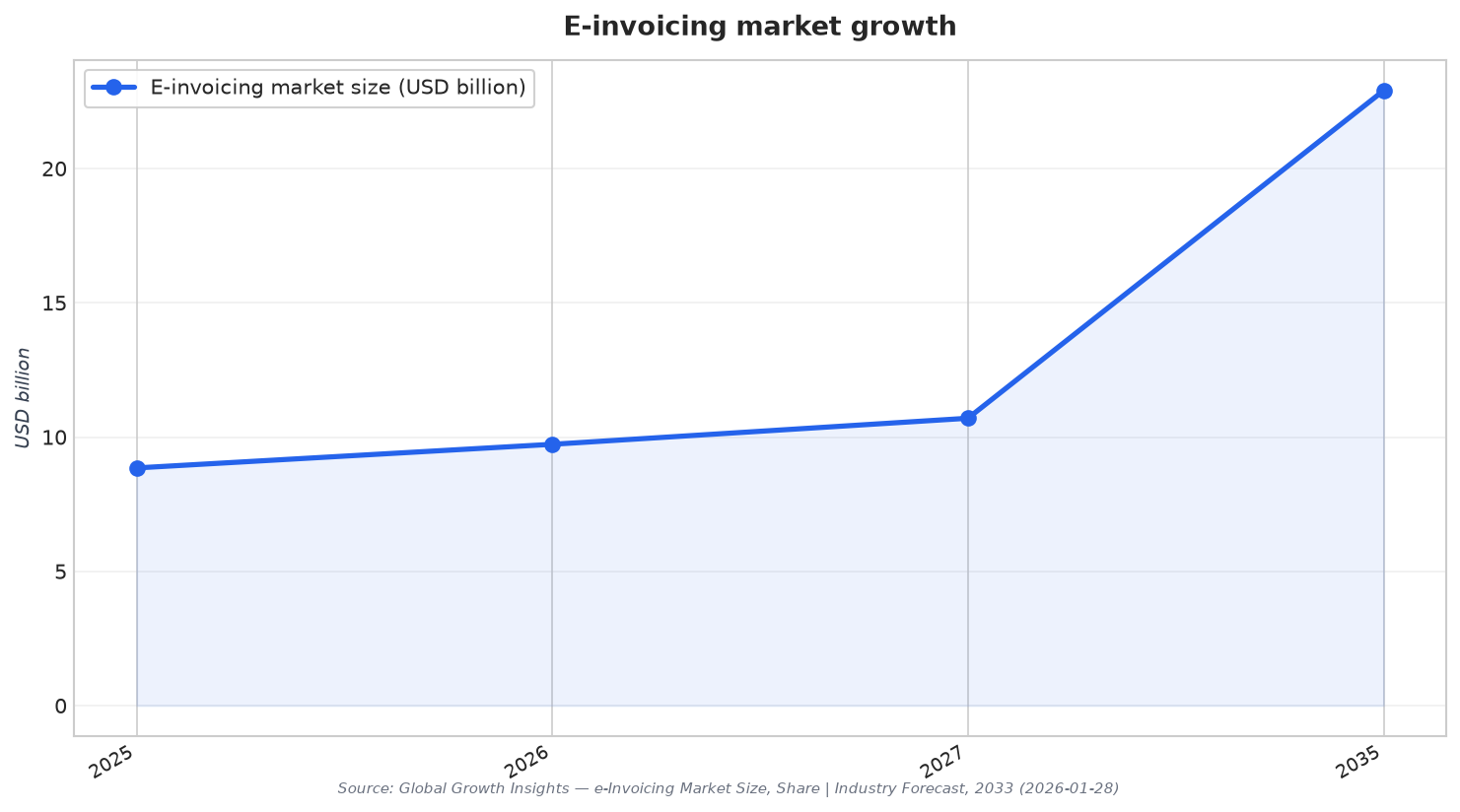
Globally, e-invoicing adoption and mandates are already measurable, and those figures help ASEAN leaders benchmark maturity without conflating geographies. Global Growth Insights reports that Asia-Pacific accounts for 27% of the e-invoicing market and that government regulations are driving the segment, with over 82% of countries implementing or planning mandatory electronic invoicing laws. It also reports India reaching an 82% B2B compliance rate under its GST regime and China’s e-invoicing coverage at 78% across key provinces, plus that over 78% of large enterprises have already implemented electronic invoicing systems. The same source states invoicing automation has improved operational efficiency by up to 62%, and over 55% of multinational organizations are prioritizing e-invoicing integration in ERP systems—exactly the kind of integration motion ASEAN businesses now need for compliance.
For 2026 execution, the most resilient operating model is “platform-ready compliance.” That means building API-first connections between ERP/POS and the required tax portals, then treating invoices as auditable events with consistent identifiers, signatures, and submission logs. MarkWide Research describes API-first procurement architectures connecting ERP systems to supplier networks, enabling automated purchase order generation and invoice reconciliation—capabilities that become more valuable when mandates require fast, correct reporting. Channel Tech Asia also points to infrastructure shifts, noting that Google Cloud and Singtel will deploy distributed cloud edge nodes across six ASEAN countries, bringing low-latency compute and managed cloud services closer to enterprises. Together, these changes make the 2026 playbook clear: build standardized data pipelines, localize only what each tax authority mandates, and operationalize monitoring so compliance does not break when volumes surge.
What is changing in ASEAN e-invoicing tax compliance in 2026?
Which ASEAN countries are explicitly cited as running national e-invoice programs?
Why does e-invoicing matter more as B2B e-commerce grows in Asia-Pacific?
What global adoption signals can ASEAN firms use for benchmarking?
What operating model best supports multi-country e-invoicing requirements?