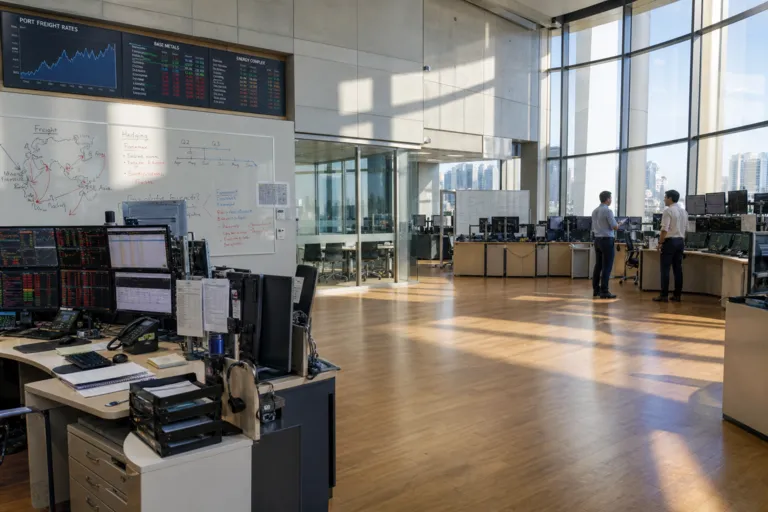
In 2026, commodity traders are making a location decision that is as much about operating speed as it is about risk control. The case for Singapore is often described as a combination of deep port infrastructure, a concessionary tax regime for physical and derivative trading, and a stable legal system. In practice, it is a package choice. Enterprise Singapore and the Economic Development Board frame it around three pillars: a concessionary corporate tax rate for qualifying trading income, a network of free trade zones for duty- and GST-suspended storage, and an immigration framework designed to let trading houses bring in specialist traders quickly.
The incentive most frequently tied to that package is the Global Trader Programme (GTP), administered by Enterprise Singapore under Section 43P of the Income Tax Act 1947. The GTP offers a concessionary tax rate of 5%, 10% or 15% on qualifying trading income, with a five-year award period that is renewable subject to performance. The qualifying scope is broad. It includes physical trading, brokering, derivative trading linked to commodities, and structured commodity financing. This is one reason many established trading houses place Asia-Pacific or global trading desks in Singapore rather than treating it purely as a back-office booking location.
Volatility Is Forcing Faster Decisions on Risk, Supply, and Capital
Market conditions in 2026 keep reminding trading firms that speed matters. TradingEconomics commodity quotes dated Oct/07 show oil benchmarks at USD88.843/bbl for Crude Oil and USD100.865/bbl for Brent, with YTD moves of 54.72% and 65.76% respectively and YoY changes of 42.03% and 52.25%. In metals, Gold is listed at USD4108.26/t.oz, while Copper is shown at USD6.5887/lb with YTD up 15.96% and YoY up 31.50%. Price shifts at these magnitudes intensify the need for strong legal enforceability, robust financing, and experienced risk talent—elements that Singapore’s positioning as a commodities base explicitly emphasizes.
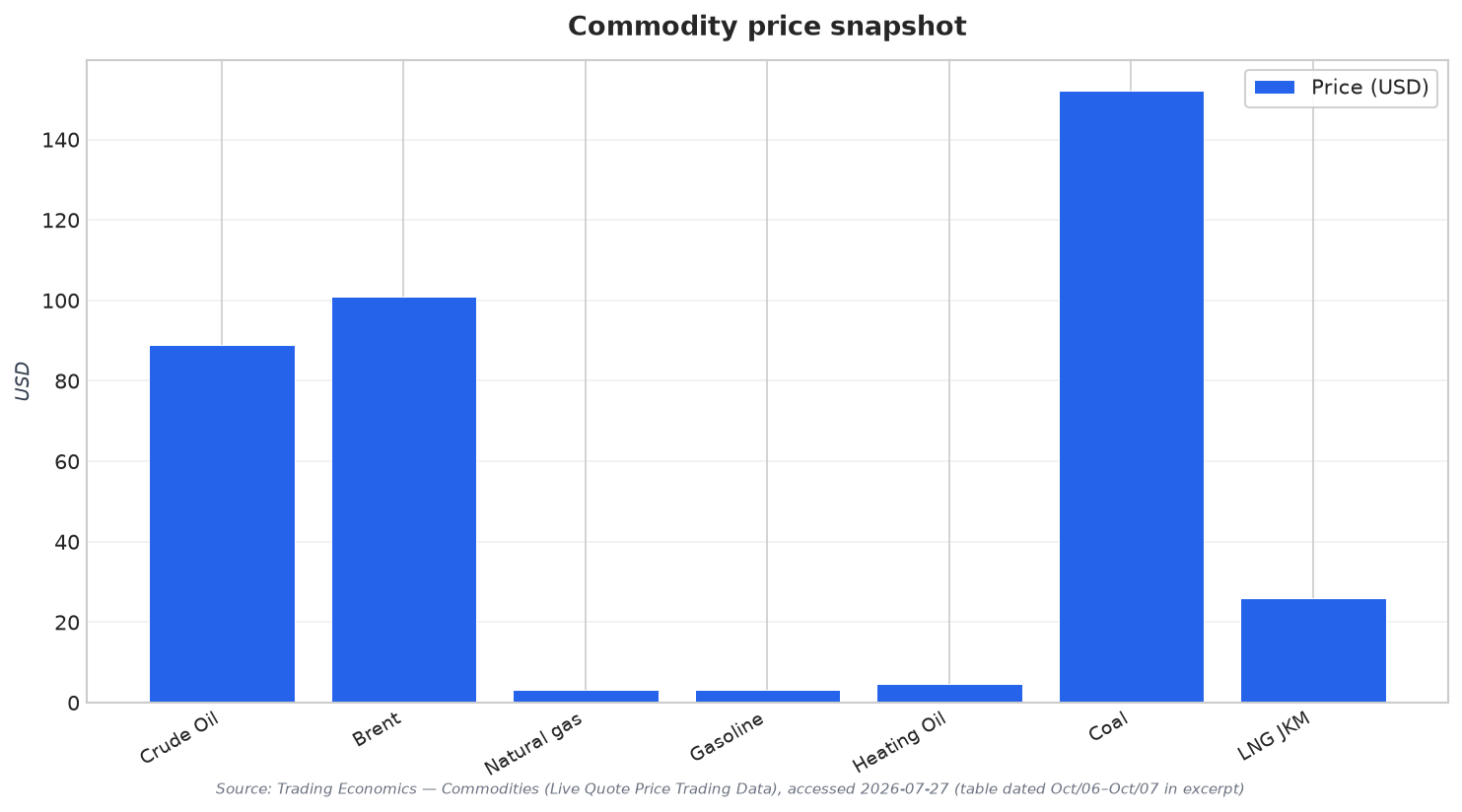
Energy market expectations add another layer to trading desk strategy. Fitch Solutions raised its annual average price forecast for JKM to USD15.5/mnBTU in 2026, from USD12.5/mnBTU, citing longer-than-expected disruptions in the Strait of Hormuz and spillovers into 2027. The same outlook notes that over 220mtpa of liquefaction capacity is slated to come online in the next five years, described as equivalent to over 50% of the global LNG trade in 2025. For houses active in LNG, these forward-looking signals can amplify the value of running a cross-commodity book where physical flows, derivatives linked to physical trading, and structured financing can sit under one policy and compliance roof.
But a trading hub is also about the day-to-day operating environment that supports teams, offices, and support functions. Cushman & Wakefield’s Singapore Market Outlook H2 2026 says Singapore’s economy is forecast to grow 2.0–4.0% in 2026 despite global volatility, and describes the market as supported by safe-haven status, resilient occupier demand, and a favourable interest rate environment. It also highlights constrained supply in new office, industrial, and retail completions, alongside a flight to quality in premium office assets and modern logistics facilities. For the Singapore commodity trading hub in 2026, that combination supports the practical needs of trading houses: talent density, warehousing and logistics options, and the confidence that comes from a predictable, stable base.
Why are commodity houses focusing on Singapore as a trading base in 2026?
What tax rates can qualify under Singapore’s Global Trader Programme?
What kinds of activities count as qualifying income under the GTP?
What market signals in 2026 increase the need for strong commodity risk and execution hubs?
How does the 2026 outlook support the idea of a Singapore commodity trading hub?